Carregando...

Brane Frankovic
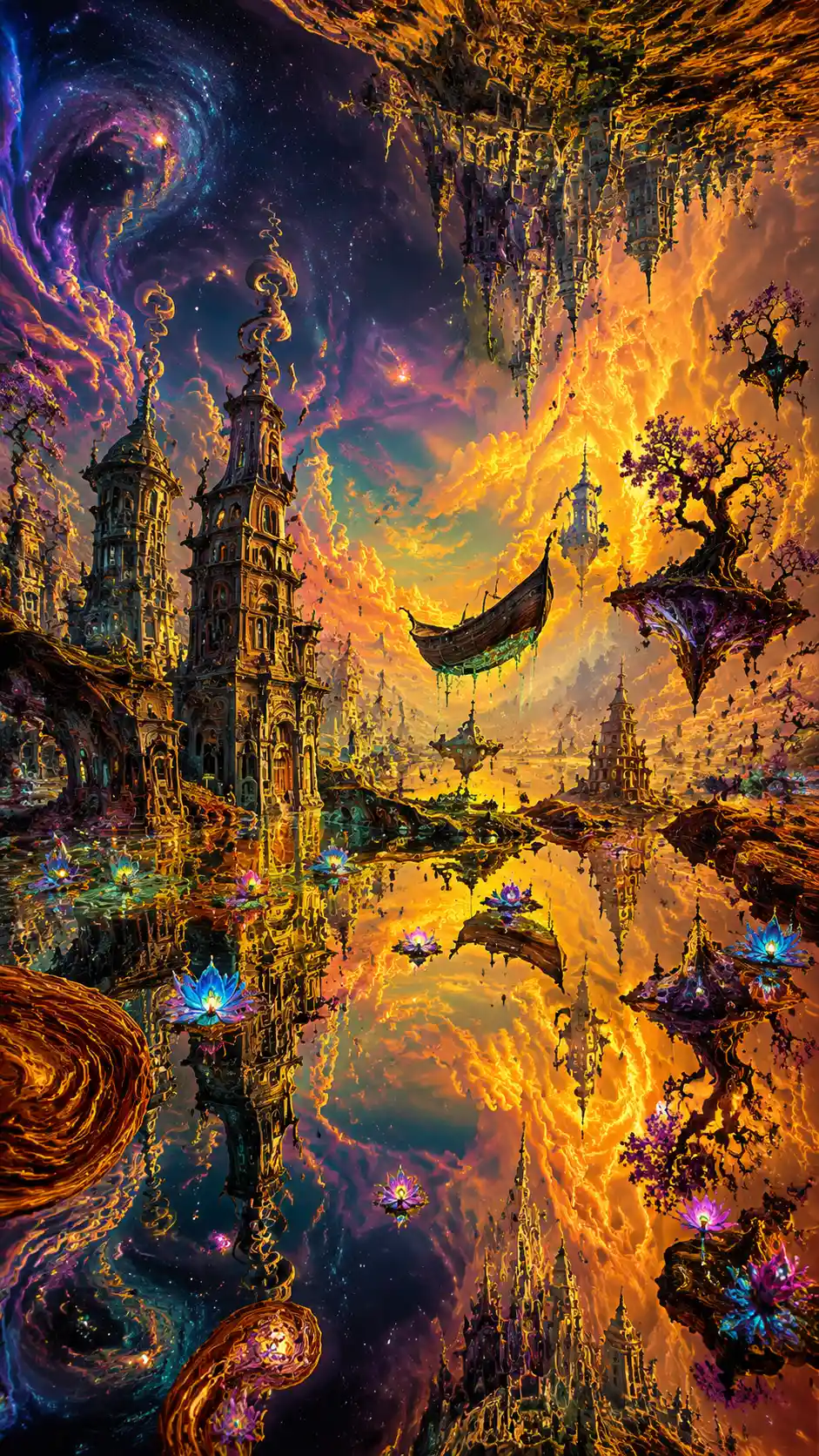
Colinas âmbar surreais sob um céu dividido em índigo e dourado
Prompt
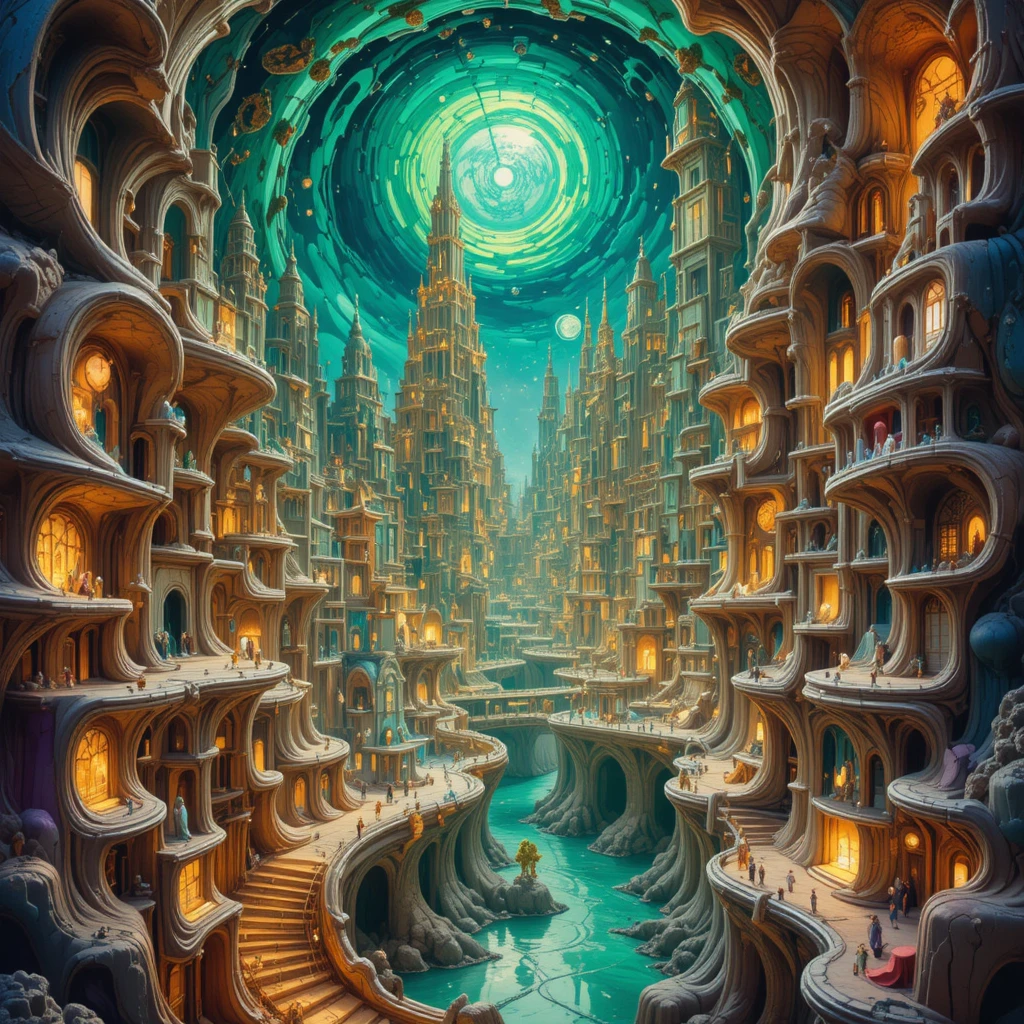
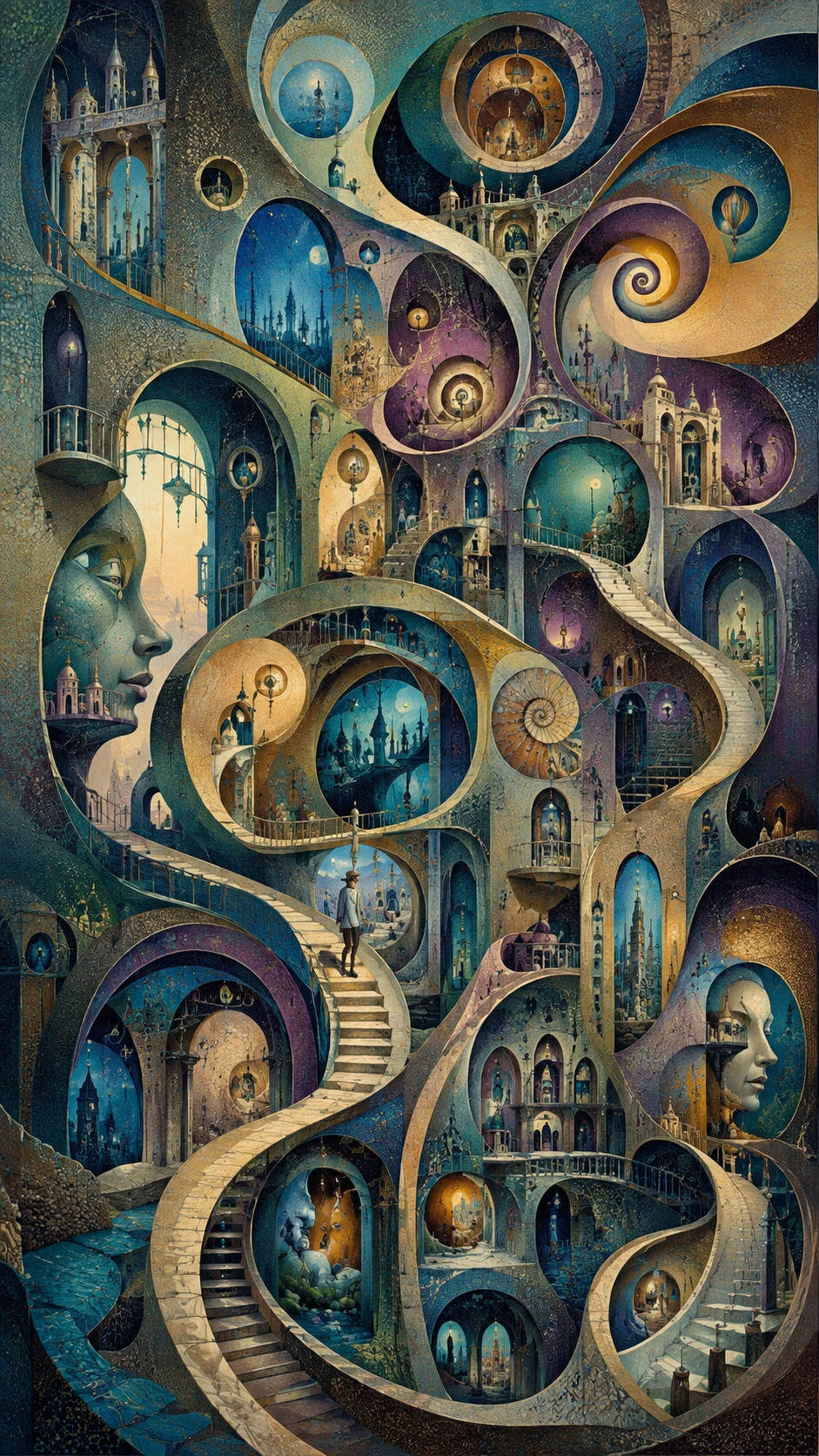
a fever-dream landscape where gravity has surrendered entirely—rolling hills of liquid amber twist into impossible spirals, their surfaces gleaming like molten glass under a sky split between bruised indigo and molten gold. Towers of warped architecture rise from the water’s edge, their facades bending like wet parchment, adorned with spiraling chimneys that dissolve into swirling smoke. The water itself is a mirror of delirium, reflecting upside-down palaces and floating gardens where flowers pulse with bioluminescent hues, their petals thin as vellum, backlit by an unseen sun. Brushstrokes of light carve the scene—thick impasto ridges define the hills, while distant spires blur into mist, their edges softened as if viewed through a rain-streaked window. A lone wooden boat drifts midair, tethered to nothing, its hull trailing vines of glowing algae that drip like liquid neon. The air shimmers with heat haze, distorting the already surreal horizon where a second, inverted city floats impossibly above the first. Every texture clashes yet harmonizes: the rough bark of floating trees against the slick, oil-slick water; the crisp edges of cut-crystal flowers melting into their own reflections. The light is cinematic, golden, slicing diagonally to cast long, sentient shadows that stretch and recoil like living things. It’s a world where physics is a suggestion, and every inch thrums with the electric tension of a dream teetering on the edge of collapse. Captured in hyper-detailed 8k resolution with a Canon EOS R5, the image balances brutality and beauty—Wes Anderson’s symmetry colliding with Picasso’s fractured perspectives, all rendered in Amanda Sage’s psychedelic glow.
Model
GPT-Image-2
Date created
05/11/26 at 11:19 AM
Seed
8897924328
Resolution
941 x 1672
Related images