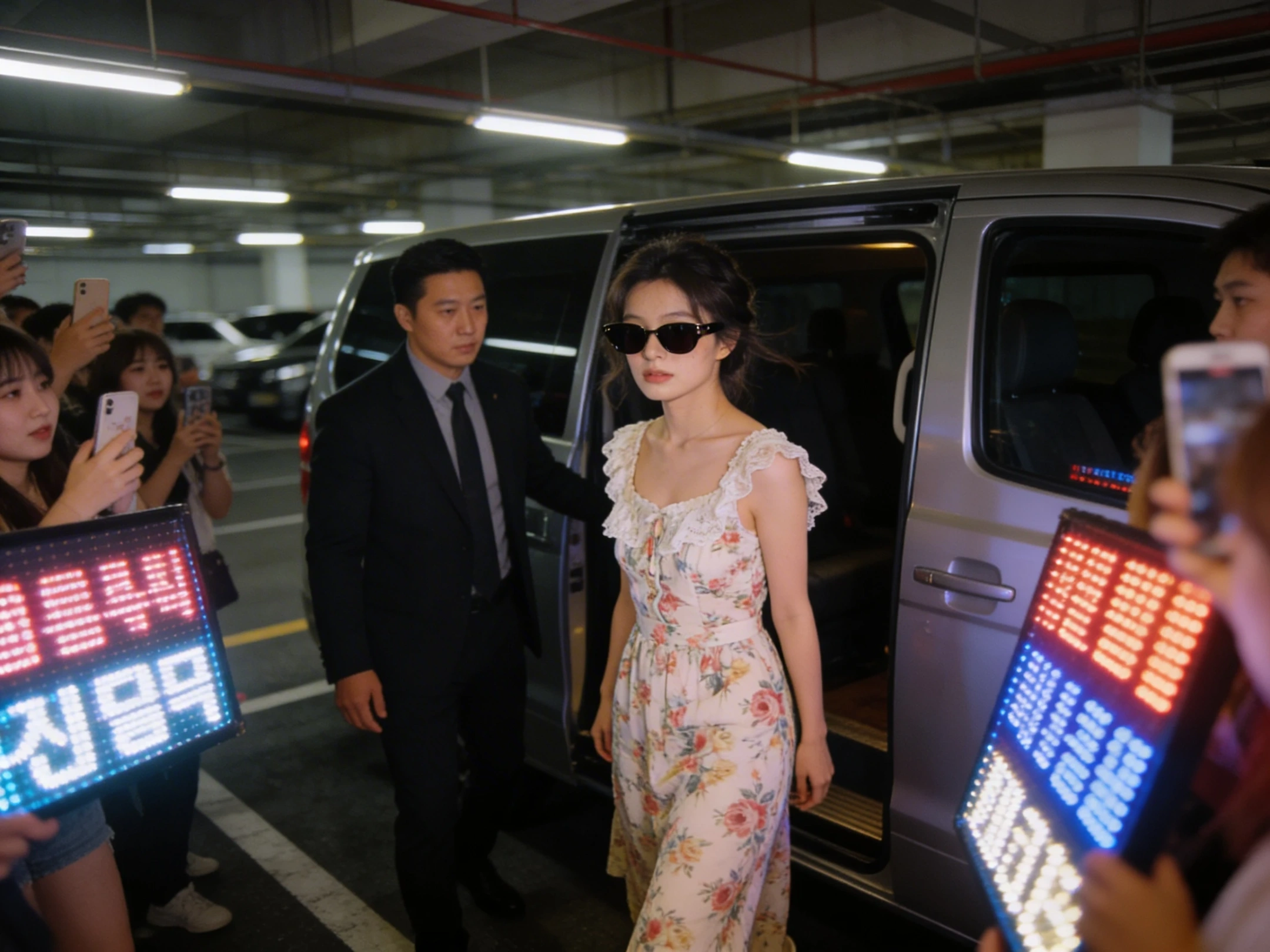
You know those scenes, right?
The ones where a K-pop idol walks through the airport, completely surrounded by fans—phones in the air, flashes going off, security barely holding the line. It’s chaotic, a little overwhelming, but somehow still looks… iconic.
I kept seeing those clips and thought—
what if I just gave myself one?
So I tried it. And it worked.
Turning a Normal Photo Into a Celebrity Moment
All I did was take a regular photo and drop it into a very specific kind of scene:
an airport arrival, but not the quiet kind—the full fan frenzy version.
That detail matters because “airport” alone doesn’t mean much.
But “K-pop airport fashion moment”? That’s a whole visual language.
In real life, these scenes are already intense. Fans and media gather in huge numbers just to catch a glimpse of an idol, turning something as ordinary as walking through a terminal into a full-blown event
So when you describe that structure clearly, the AI doesn’t need to guess what you mean. It already understands the pattern.
Here’s the prompt that made it click for me:
K-pop idol airport fashion shot, the girl in the image wearing fashion Gucci sunglasses and gorgeous Dior dresses, surrounded by hundreds of fans, LED light boards with blurry text, chaotic but glamorous atmosphere, bodyguards forming human wall, flashes popping everywhere creating starburst effects, reflection on marble floor, tension and excitement in the air, shot from low angle emphasizing celebrity status, cinematic lighting, motion blur, high-energy sceneWhat surprised me wasn’t just how good it looked.
Before | After |
|---|---|
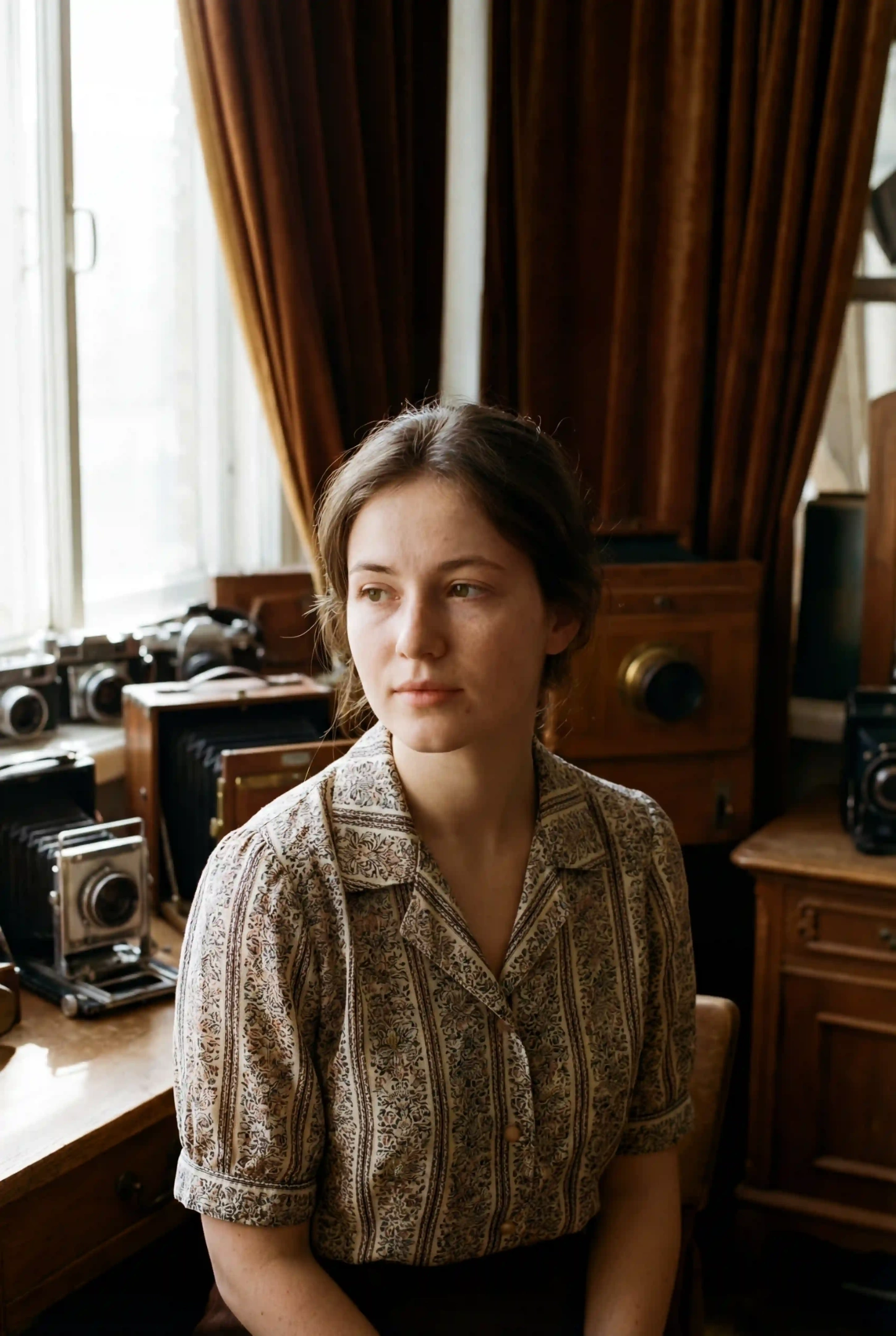 | 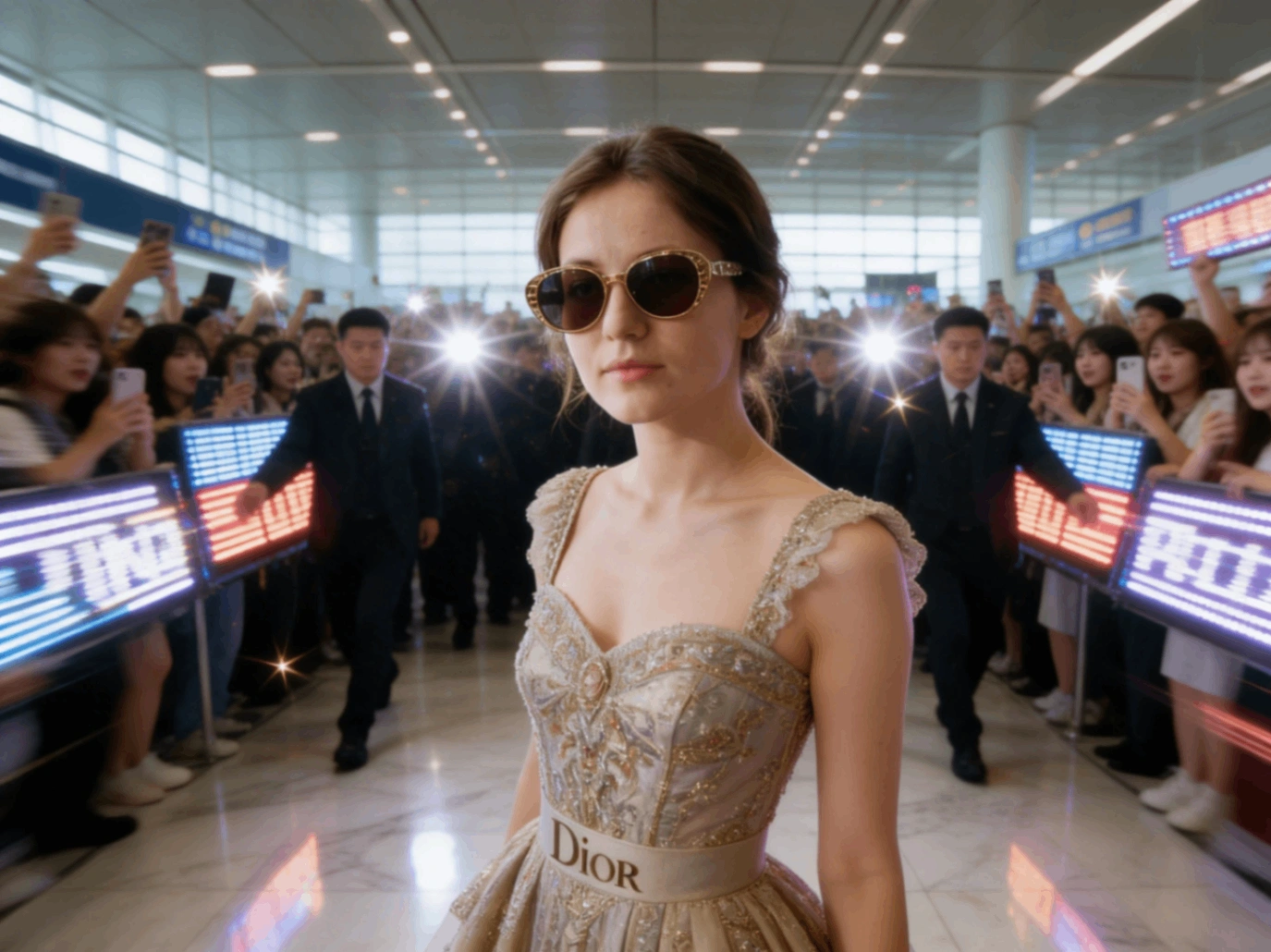 |
It was how quickly the image changed meaning.
The same person, same face—but now it feels like someone people showed up for.
Why This Feels So Real
It’s not about realism in the technical sense.
It’s about recognition.
Airport fashion in K-pop has basically become its own stage. Idols don’t just pass through airports—they turn those moments into widely shared fashion events, often going viral within hours
So when you recreate that setup, you’re not inventing anything new.
You’re borrowing a scene people already believe in.
Crowd means attention.
Flashes mean importance.
Low angle means status.
Once those signals are in place, your brain fills in the rest.
Making It Work (Without Overcomplicating It)
At first I thought I needed a longer prompt.
Turns out that wasn’t the issue.
What actually matters is direction.
If the crowd feels empty, the scene loses tension.
If the lighting is flat, the whole “celebrity moment” disappears.
If the camera angle is too neutral, it just looks like a regular photo again.
Small changes fix that quickly. A low angle instantly adds presence. Motion blur makes the chaos believable. Even something like “bodyguards forming a wall” gives the scene structure, so it doesn’t feel random.
It’s less about adding more—and more about telling the model what kind of moment this is.
Then I Tried It With My Dog
Same prompt structure. No big changes.
Just… swapped the subject.
Now imagine a small dog standing in the middle of that same scene—fans holding signs, cameras flashing, people trying to get closer.
It shouldn’t work.
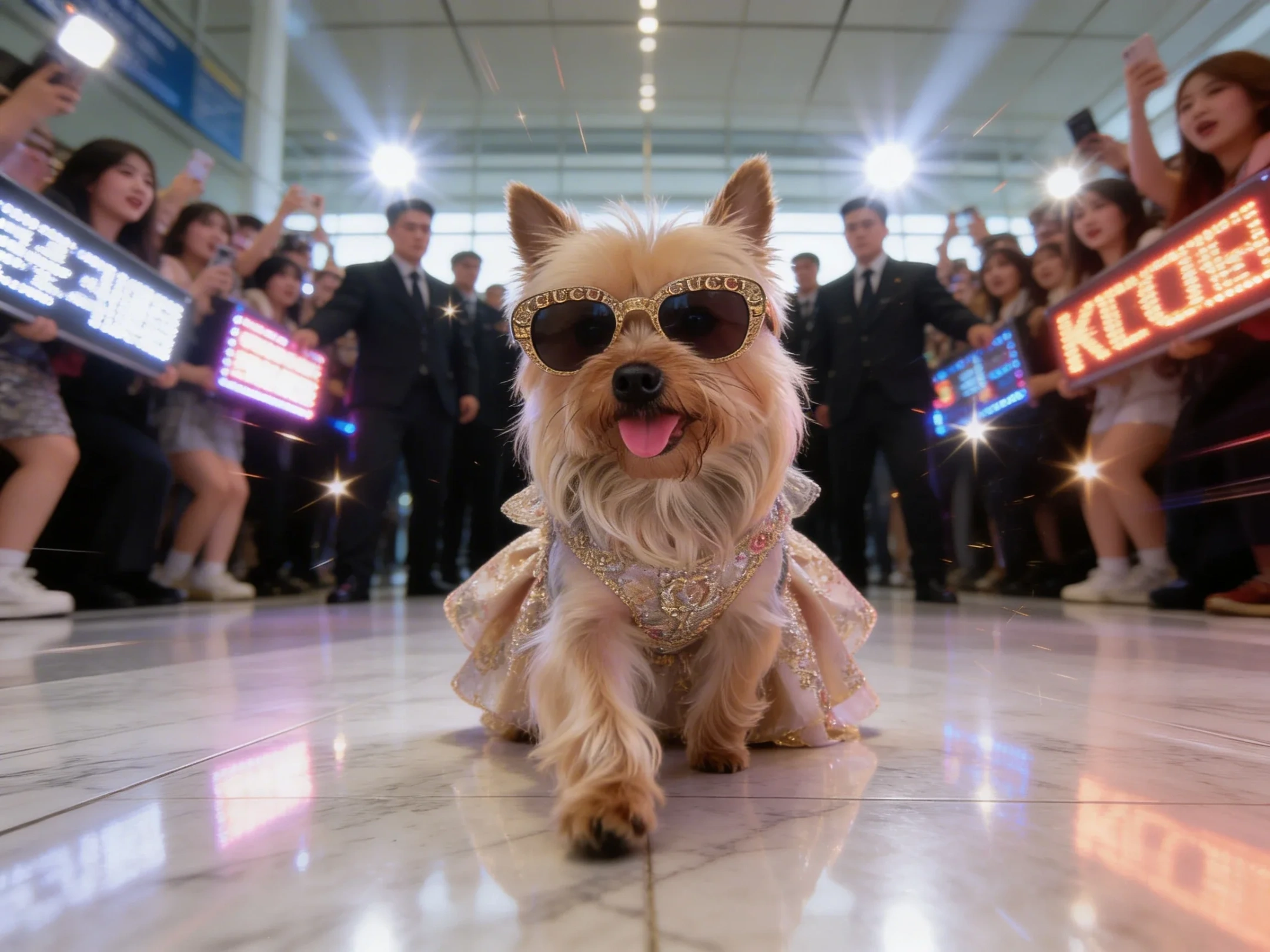
But somehow it works even better.
Because now the image has a twist.
You’re not just looking at a “celebrity moment” anymore.
You’re looking at something slightly absurd, but still emotionally familiar.
It makes you pause for a second.
Like—
wait, why is everyone here for this dog?
What This Trend Is Really About
This kind of AI content isn’t about making things prettier.
It’s about changing context.
You take something ordinary and place it into a situation that already carries meaning. Once that structure is there, the image does the rest on its own.
Final Thought
You don’t need a perfect workflow for this.
You just need one solid idea:
Put yourself (or anything) into a moment people already recognize.
Everything else tends to fall into place.