I’ve been noticing more and more dreamcore videos showing up: scroll a few times and you’ll probably run into one. An empty hallway that feels too quiet. A place that looks familiar but slightly wrong. A slow fall that never really ends.
Have you ever watched one of those and wondered, how is this even made?
Not just technically—but how do they get that feeling so right?
I had the same question. So I tried a way to generate my "DREAMCORE": break the dream into pieces, build it step by step, and see what happens in between.
This article is just that process—how I took a vague dreamcore idea and turned it into a short video using a low-cost setup, a handful of images, and a lot of small, controlled transitions.
The Kind of Dream I Wanted to Build
The idea wasn’t a story in the traditional sense. It was more like a sequence of sensations.
You’re sitting on a faded carousel, no one else around. It’s already moving, even though it shouldn’t be. Then something shifts—you stand up, or maybe the world drops—and suddenly you’re falling. Water closes in. Below you, a staircase keeps going down, deeper than it should. At the bottom, there’s no resolution, just a hole that doesn’t end. You look up, there’s light. You look down, and you let go again.
That’s all I needed. Not a script—just a direction.
Why I Chose Seedance 1.5 Pro
What made this process workable was using Seedance 1.5 Pro. Not because it’s perfect, but because it’s forgiving in a very practical way.
A 4-second 480P clip costs only 26 lumen, and there’s no need to worry about audio. That changes your behavior more than you’d expect. You stop overthinking each generation. You stop trying to “get it right” in one go.
And honestly, you won’t get it right in one go anyway. Even the more expensive models still have that lottery feel. The difference here is that the cost doesn’t punish you for trying again.
Building the Video Without Forcing It
Instead of asking the model to generate a full video, I broke the whole thing down into still images first. Four images, to be exact. Not because four is magical, but because it was enough to cover the key transitions I cared about.
Each image represents a moment where the world shifts. Then I paired them—image one flows into image two, image two into image three, and so on. Each pair becomes a short clip.
That overlap does something subtle. It keeps the motion from feeling abrupt, even when the scene itself is surreal. You’re not jumping between ideas; you’re sliding between them.
The actual workflow ends up feeling less like “video generation” and more like stitching together small, controlled hallucinations.
Segment | Start Frame | End Frame | Scene Description | Prompt Suggestion |
|---|---|---|---|---|
Segment 1 | Image 1 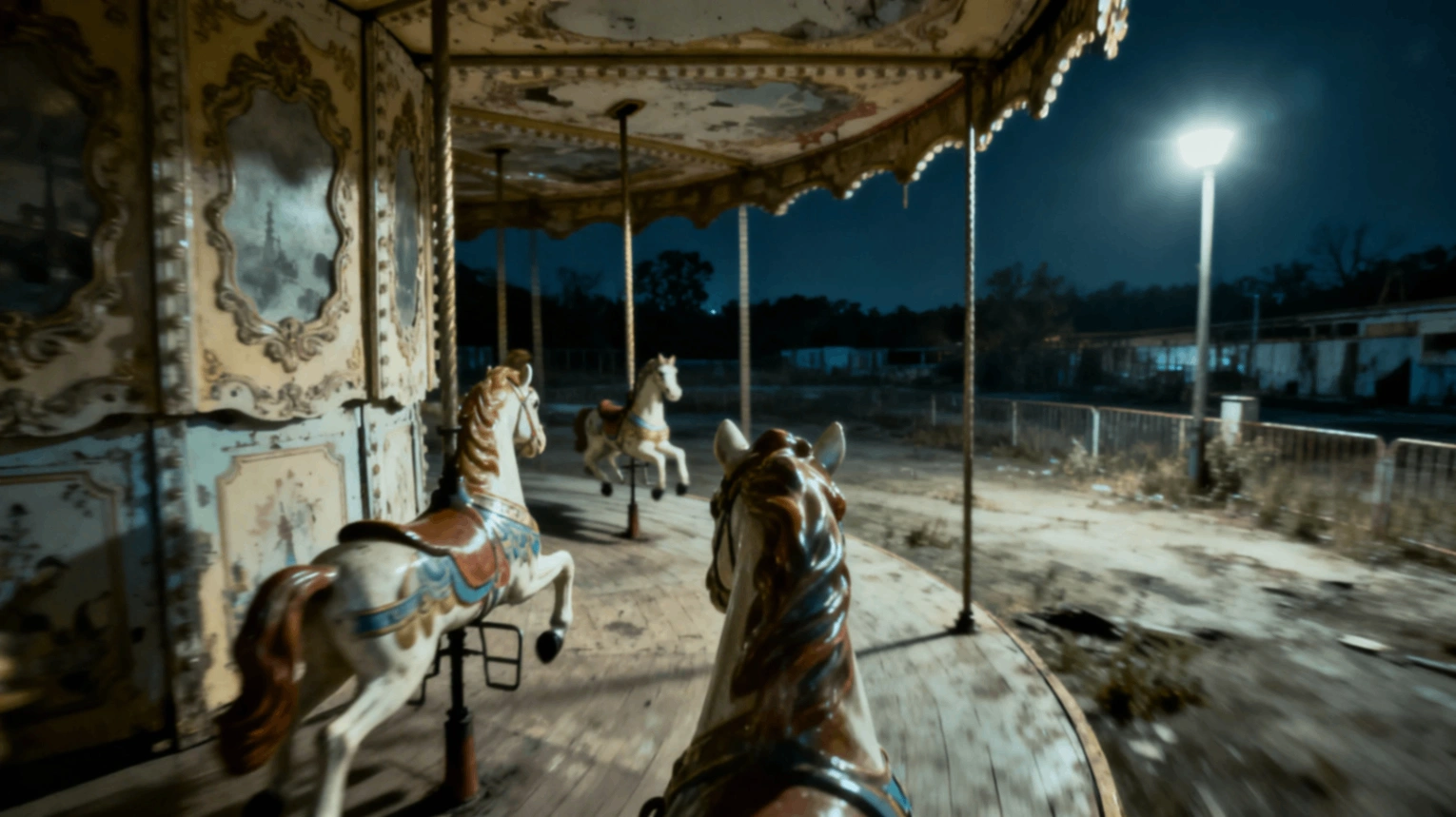 | Image 2 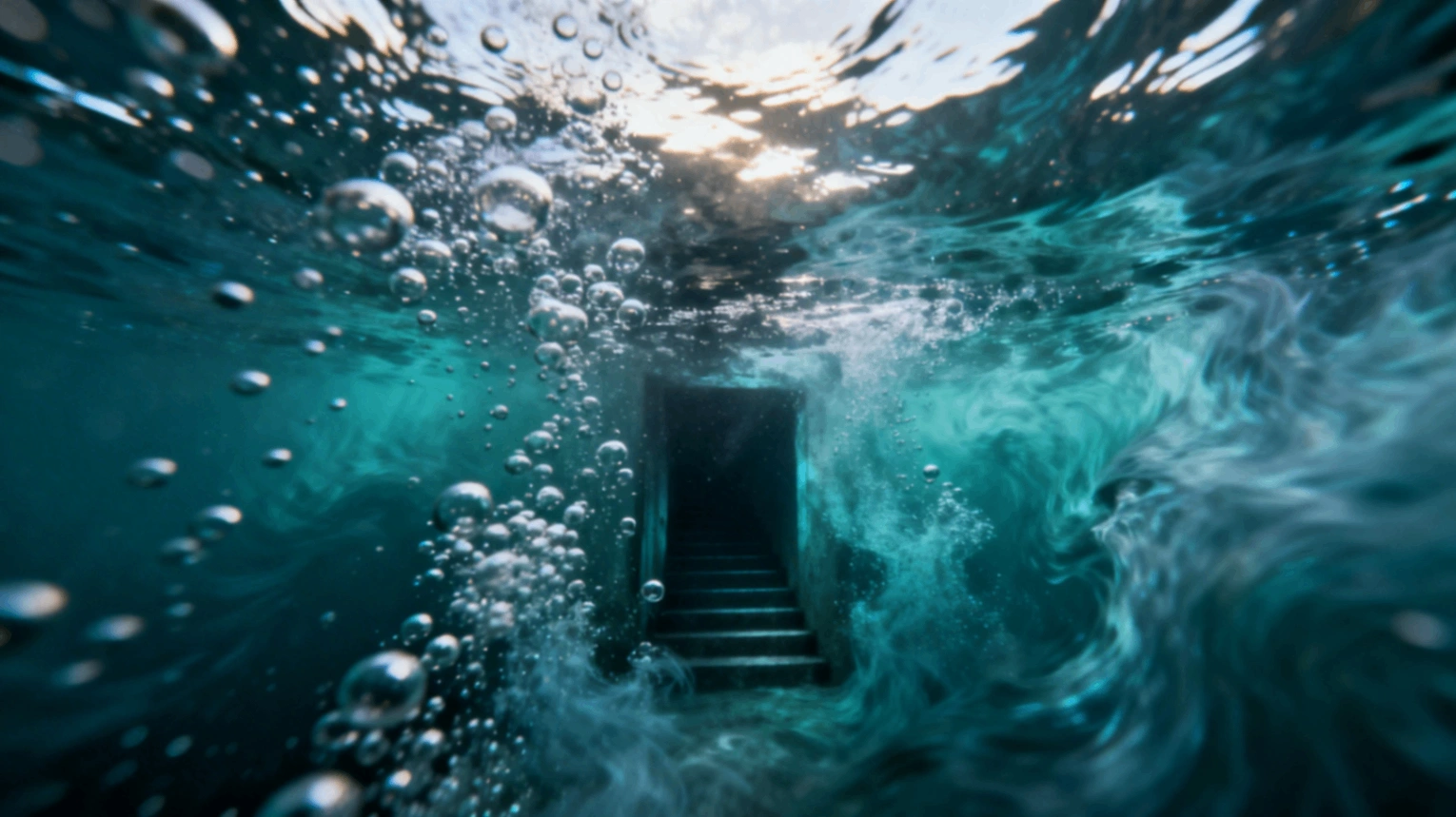 | An empty amusement park at night. A faded, color-worn carousel spins on its own. First-person POV riding the carousel, then suddenly falling off and plunging into water. | "Surreal dreamcore style, abandoned amusement park at night, faded carousel rotating on its own, first-person POV, eerie stillness, film texture, dim lighting" |
Segment 2 | Image 2 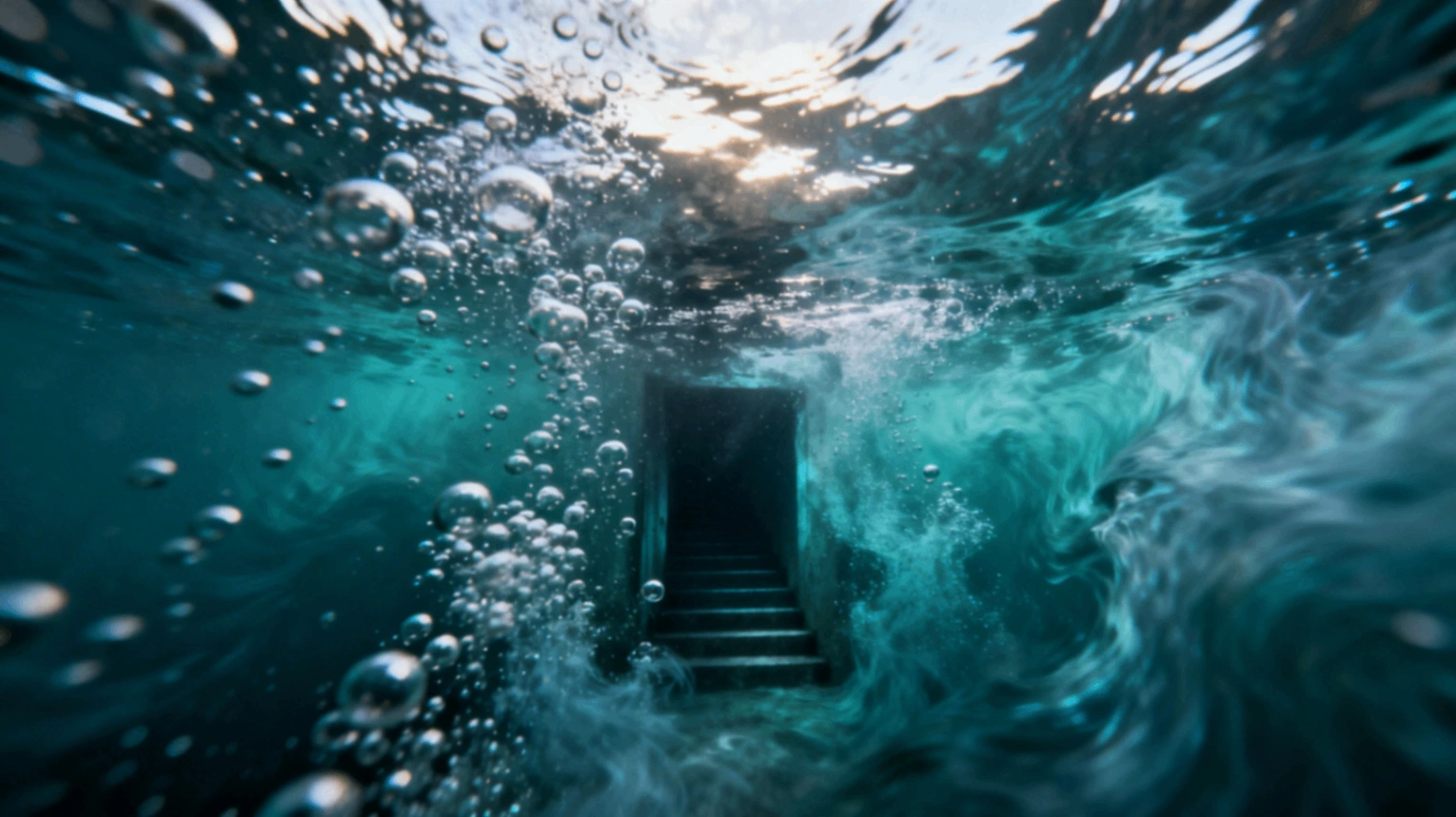 | Image 3 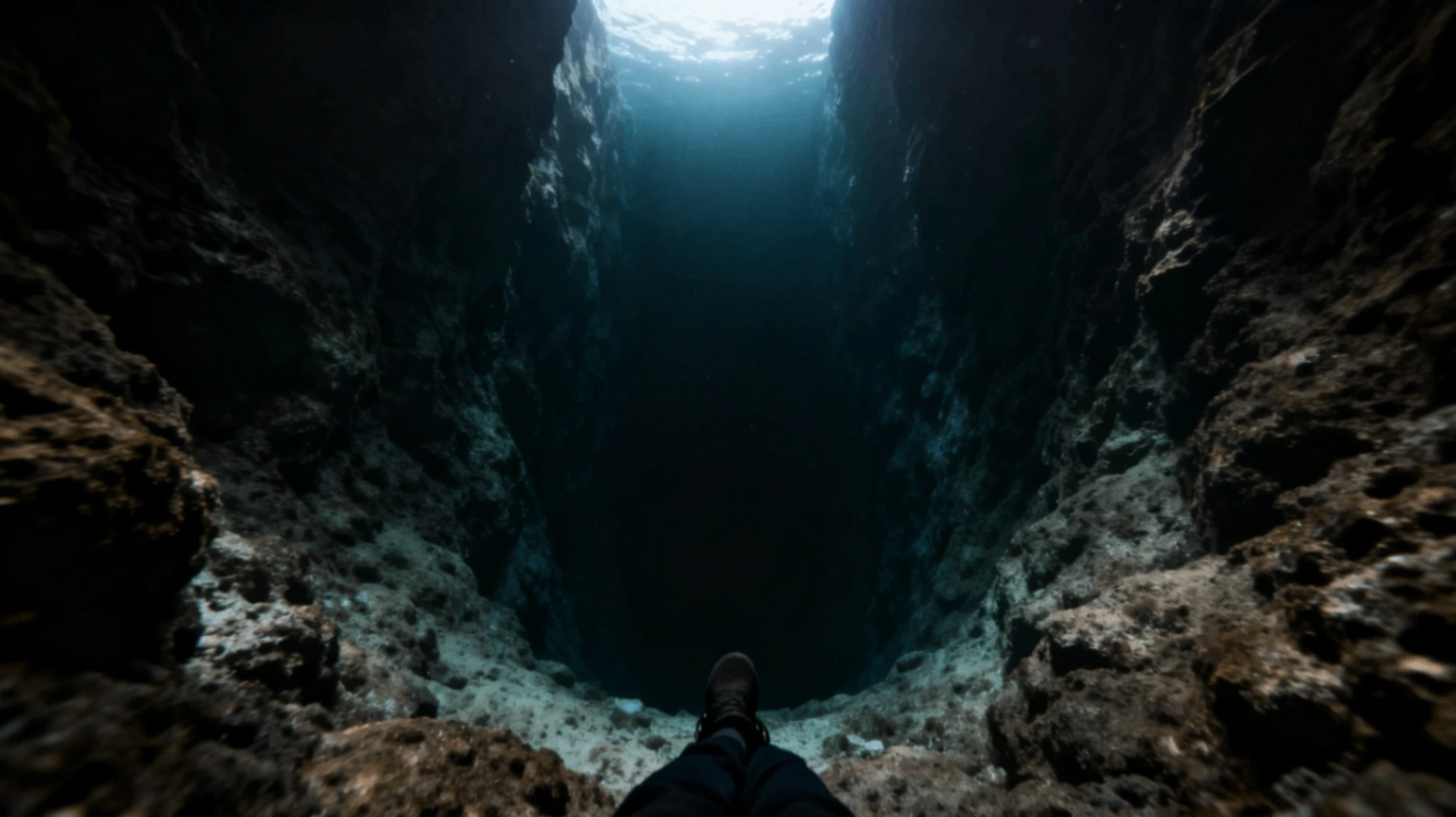 | Underwater, there is a staircase descending endlessly. The viewpoint follows the stairs downward. | "Underwater dreamcore scene, infinitely descending stone steps, deep staircase, faint underwater lighting, first-person descending, surreal space, quiet भय / unsettling atmosphere" |
Segment 3 | Image 3 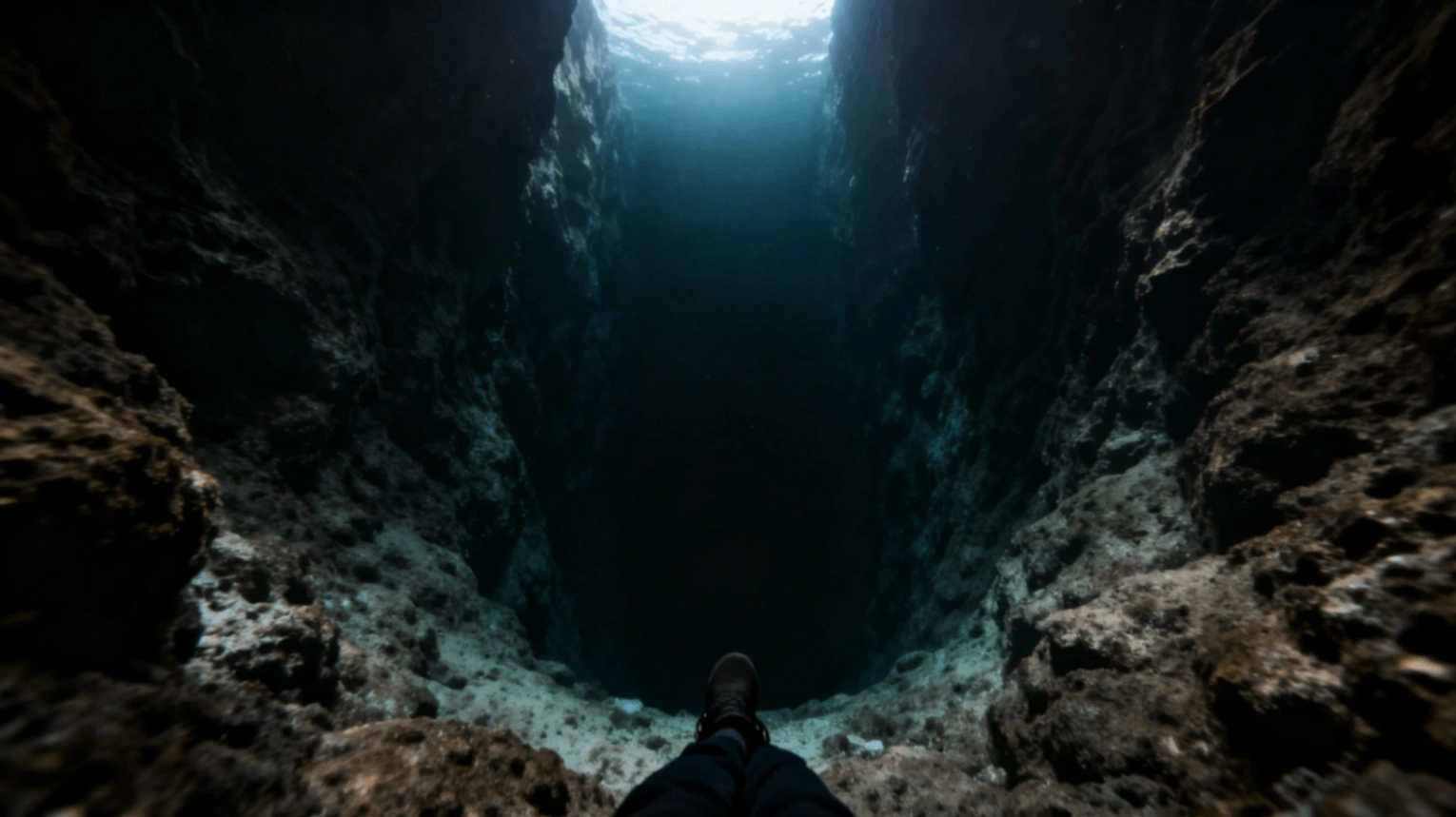 | Image 4 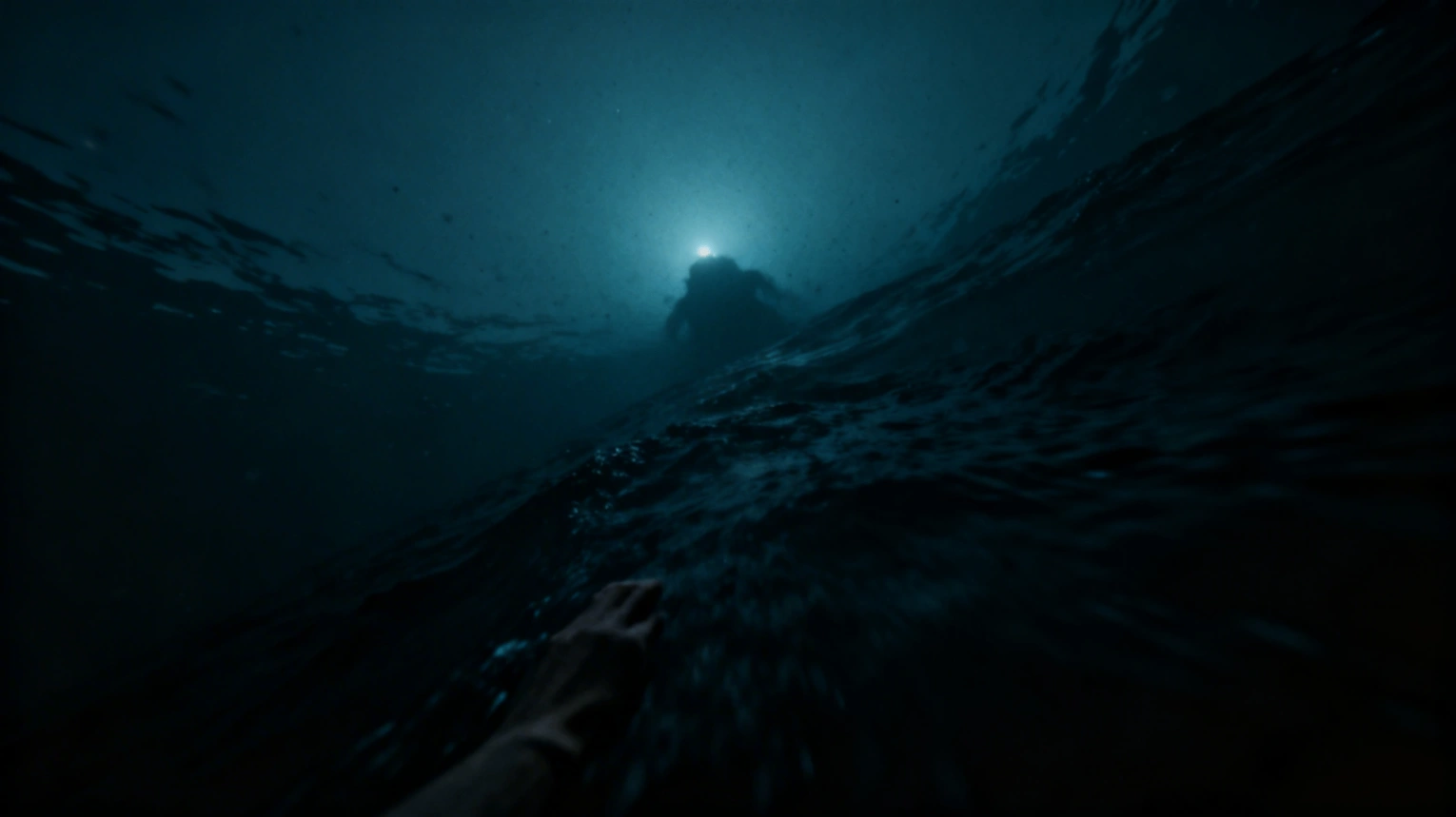 | Reaching the final step. Below is a bottomless abyss. Looking up at the faint glowing water surface, then looking down into the void and beginning to fall. | "Edge of the abyss, bottomless vertical pit, looking up at faint glowing water surface, looking down into the void, beginning to fall, dreamcore atmosphere, infinite depth, surreal horror aesthetic" |
Translating the Visual Into Prompts
Most of my prompts started in Chinese. Not for any technical reason—just because it’s easier to think in images that way. But before generating, I translated and tightened them into English.
Here’s how the four key frames looked after that process.
The first image sets the tone:
Surreal dreamcore scene, abandoned amusement park at night, heavily faded and color-bleached carousel spinning on its own, eerie silence with no one around, strict first-person POV riding the horse, only seeing the backs of the rotating horses ahead and the distant night sky, dim streetlamp lighting, film grain texture, low saturation, nostalgic yet unsettling atmosphere, shallow depth of fieldThe second image is the rupture—the moment everything breaks:
Surreal underwater dreamcore scene, strict first-person POV at the moment of falling into deep water, surrounded by rising air bubbles, chaotic water flow distorting the view, refracted light from the surface above creating fragmented patterns, through the water a vague dark staircase entrance can be seen below, strong sense of water resistance, quiet and suffocating atmosphere, blue-green tones, heavy distortion, film grain textureBy the third frame, the space becomes quieter, but heavier:
Strict first-person POV underwater, looking down into a bottomless vertical abyss, absolute darkness below, faint underwater light coming from far above, strong sense of isolation and smallness, eerily silent atmosphere, low exposure, high contrast, vintage film textureAnd the last one lets go of structure entirely:
Absolute void-like darkness underwater, strong resistance from water movement, first-person perspective angled slightly upward, distant unidentifiable light points in the void, surreal horror aesthetic, dizzying sensation, film grain texture, extremely low saturation, heavy vignetteYou’ll notice these aren’t trying to “explain” anything. They just anchor the feeling. That’s enough.
Letting Motion Do the Storytelling
Once the images were ready, I moved into video generation. Each clip only needed a starting frame, an ending frame, and a bit of motion guidance.
The first segment is where most of the illusion happens.
Using image 1 as the starting frame, an empty abandoned amusement park at night, a heavily faded carousel spinning eerily on its own, first-person POV riding the carousel, seeing the rotating horses ahead and the desolate night, dim street lighting, film grain texture, low saturation purple-blue tones, nostalgic and unsettling mood;
strict first-person POV begins to rise, as if I am standing up, the carousel itself does not move, only my viewpoint elevates, then the camera tilts upward to see the carousel ceiling, while the background appears to move upward creating a falling sensation;
suddenly a rapid downward motion, glimpsing my own feet, strong sense of weightlessness, transition into image 2, camera shaking as if falling, brief pause, water splash impact, VHS-style video texture
What matters here isn’t the wording—it’s the contradiction.
Your viewpoint rises, but the world behaves like you’re falling. That small mismatch is enough for the brain to reinterpret everything.
The rest of the clips follow the same idea, just quieter. Less motion, more atmosphere. By the time you reach the abyss, nothing needs to “happen” anymore.
Editing as Selection, Not Correction
After generating a batch of clips, I didn’t try to fix the bad ones. That’s usually a dead end.
Instead, I watched everything and picked the fragments that felt right. A second here, half a second there. Then I stitched them together.
It’s closer to editing found footage than polishing a finished product. You’re not forcing coherence—you’re noticing where it already exists.
Why I Didn’t Use Kling 3.0
I did test Kling 3.0, especially since it supports multi-shot generation and image-based elements. On paper, it sounds like the better tool for this kind of project.
But in practice, each element requires multiple images, and control starts slipping once you try to manage several transitions at once. For something like dreamcore—where perspective and continuity are fragile—that loss of control shows up quickly.
Working with smaller, isolated clips kept things predictable in a way that actually mattered.
What Still Feels Off
Not everything landed perfectly. The “aged” texture—the roughness, the VHS-like imperfection—wasn’t always strong enough. Some outputs looked too clean, almost polished in a way that breaks the illusion.
And yes, there’s still that random element. Sometimes it feels like you’re pulling a lever and hoping for the right combination.
But when each attempt costs almost nothing, that randomness becomes usable instead of frustrating.
Where the Whole Thing Really Comes Together
If there’s a thread running through all of this, it’s not about prompts or tools.
It’s about transitions.
Not just moving from one scene to another, but shifting how the viewer understands what they’re seeing. Rising that feels like falling. Silence that feels heavy. Darkness that feels endless.
Once that clicks, the process gets simpler. You stop trying to control everything.
And the video starts to feel less like something you built— and more like something you just managed to catch.