Caricamento in corso...

Broadcast Views
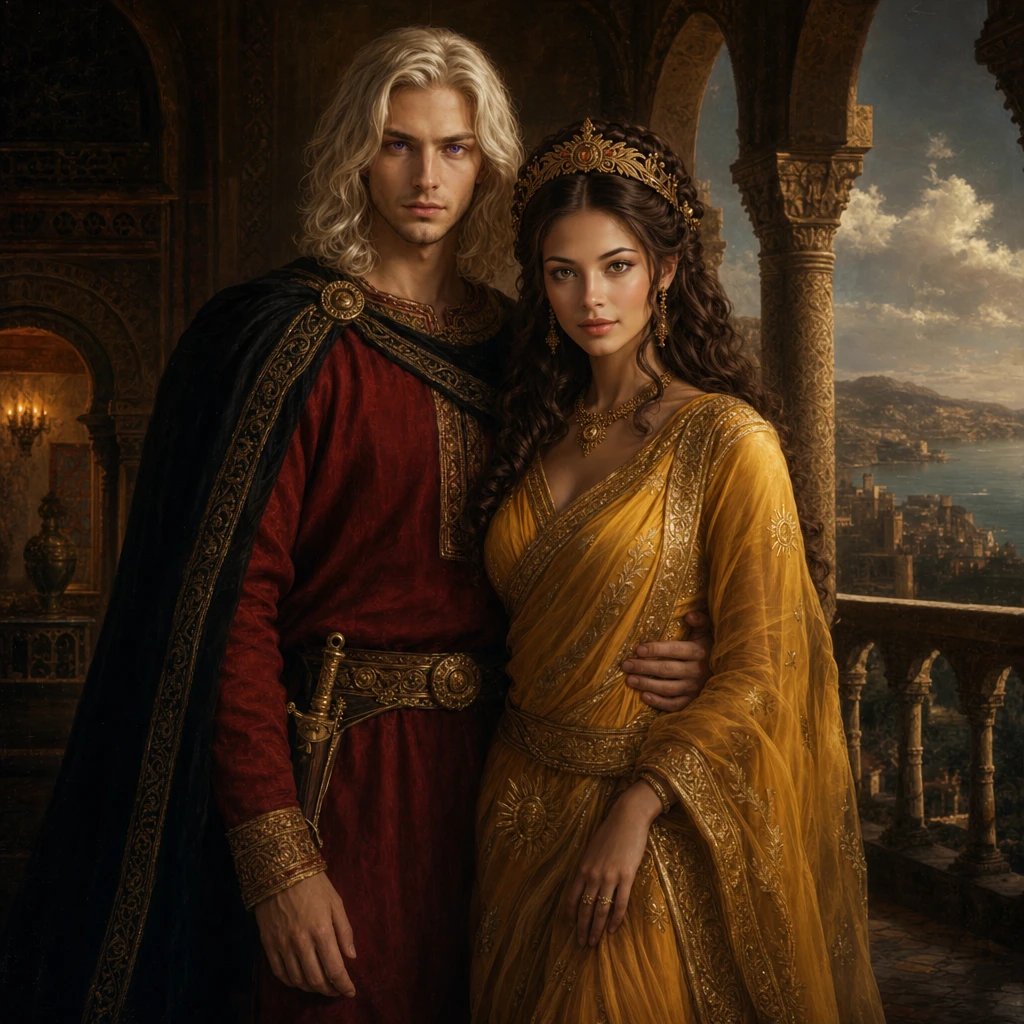
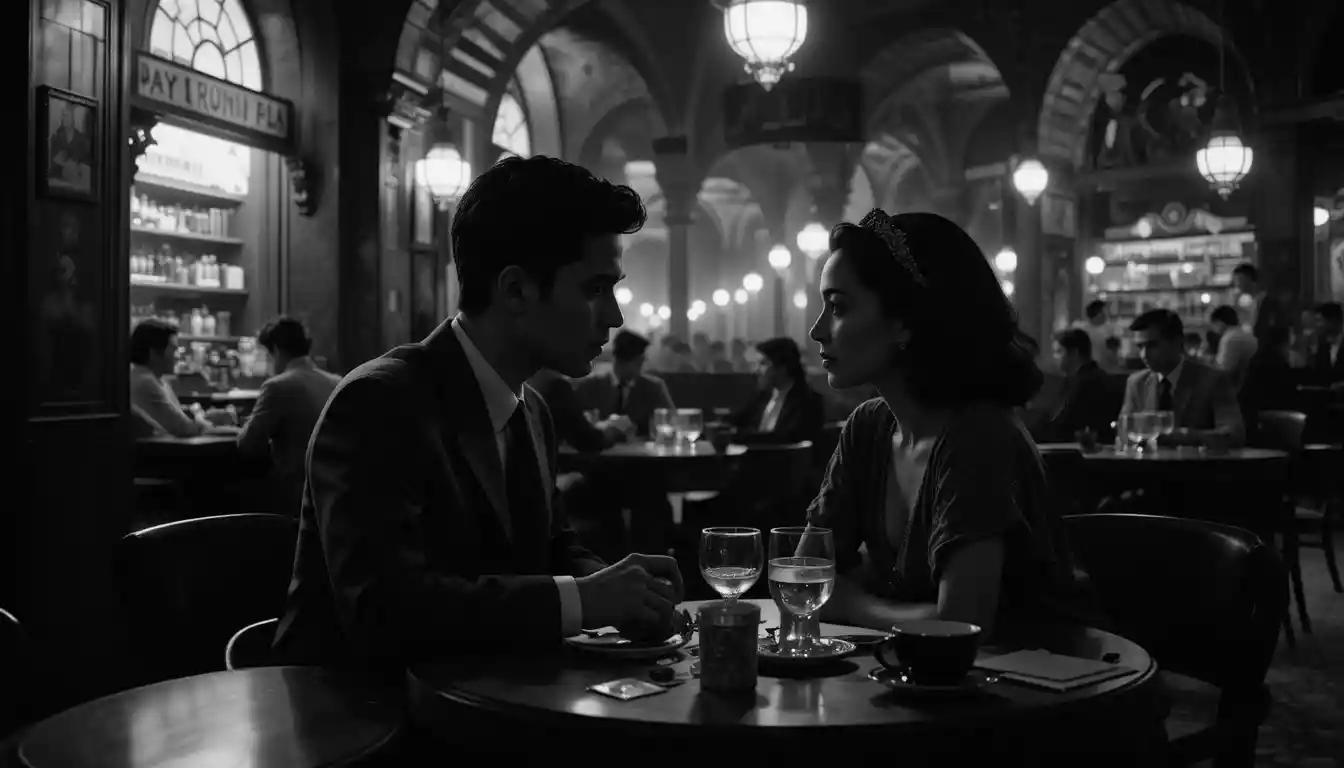
Giovane poeta che osserva una graziosa danzatrice in un caffè del Cairo
Prompt
In a bustling Cairo café in the 1930s, where the air hummed with poetry and the clink of coffee cups, Abdul Wahab, a young poet with a heart full of verses, first saw Noor. She was a dancer, her movements weaving stories to the melodies of Mohammed Abdel Wahab’s songs, which played softly in the background. Abdul, inspired by the romanticism of the era, was captivated not just by her grace but by the quiet fire in her eyes.
Abdul frequented the café, penning poems like those of Ahmed Shawky, hoping to catch Noor’s attention. One evening, he slipped a verse under her glass: “In the sea of your gaze, I drown, yet find my soul’s home.” Noor, intrigued by the words, smiled and asked to meet the poet. Their conversation flowed like the Nile—effortless, deep, and timeless.
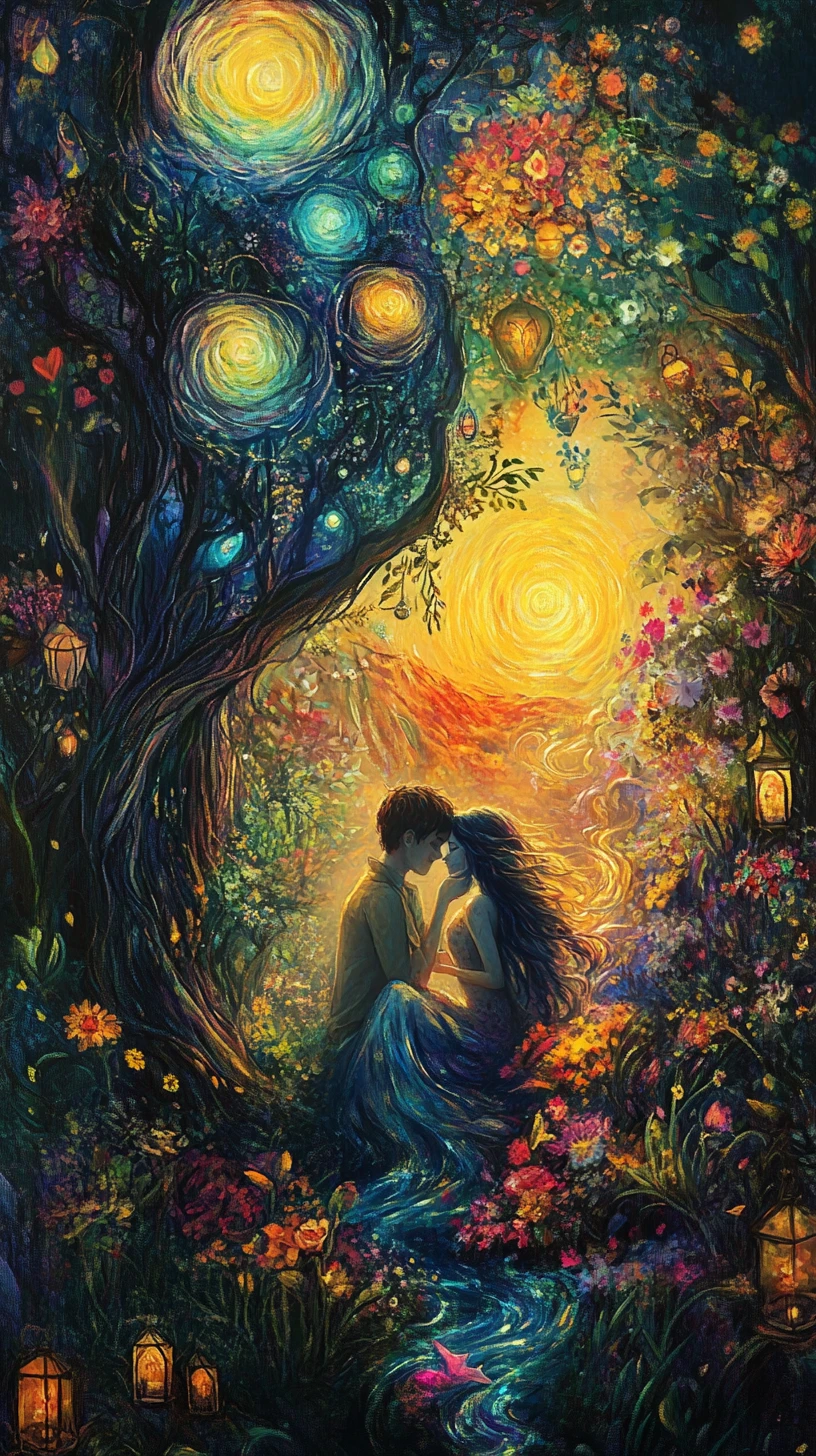
Their love grew through shared dreams and stolen moments. Abdul wrote poems for Noor, each one a thread in their unfolding story, echoing the passion of “Majnoon Layla” from Abdel Wahab’s songs. But Cairo’s conservative society frowned upon their bond—a poet and a dancer, unbound by tradition, were a scandal. Noor’s family pressured her to marry a wealthy merchant, while Abdul faced scorn for his “foolish” devotion.
One night, under a starlit sky, Abdul vowed to Noor, “My love is no cage; it’s the wings to set us free.” Inspired by the courage of lovers in Islamic stories, like Muhammad and Khadijah, they defied expectations. Noor left her troupe, and Abdul published a collection of poems dedicated to her, titled The Immortal River. The book, infused with the spirit of Abdel Wahab’s “Al Nahr Al Khalid,” became a quiet sensation, earning them enough to start a new life.
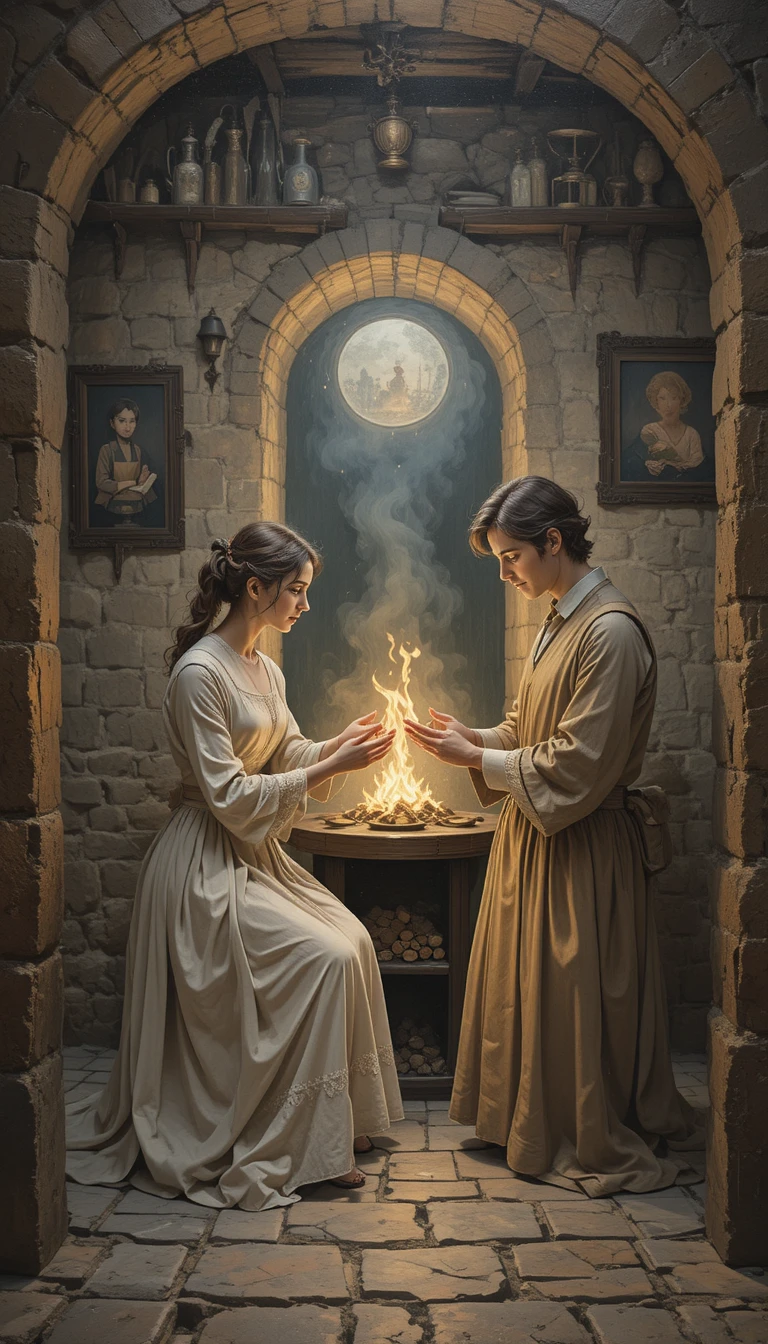
They settled in a small house by the Nile, where Abdul taught poetry and Noor choreographed dances to his words. Their love, like the river, endured—flowing through hardship, nourished by faith and art, proving that true love, as Abdul wrote, “begets love, and grows with every verse.”
Model
PicLumen Art V1
Date created
05/22/25 at 3:22 PM
Seed
40212167197
Guidance Scale
1
Resolution
1344 x 768 (16:9)
Related images