Caricamento in corso...

Muzamil Designer
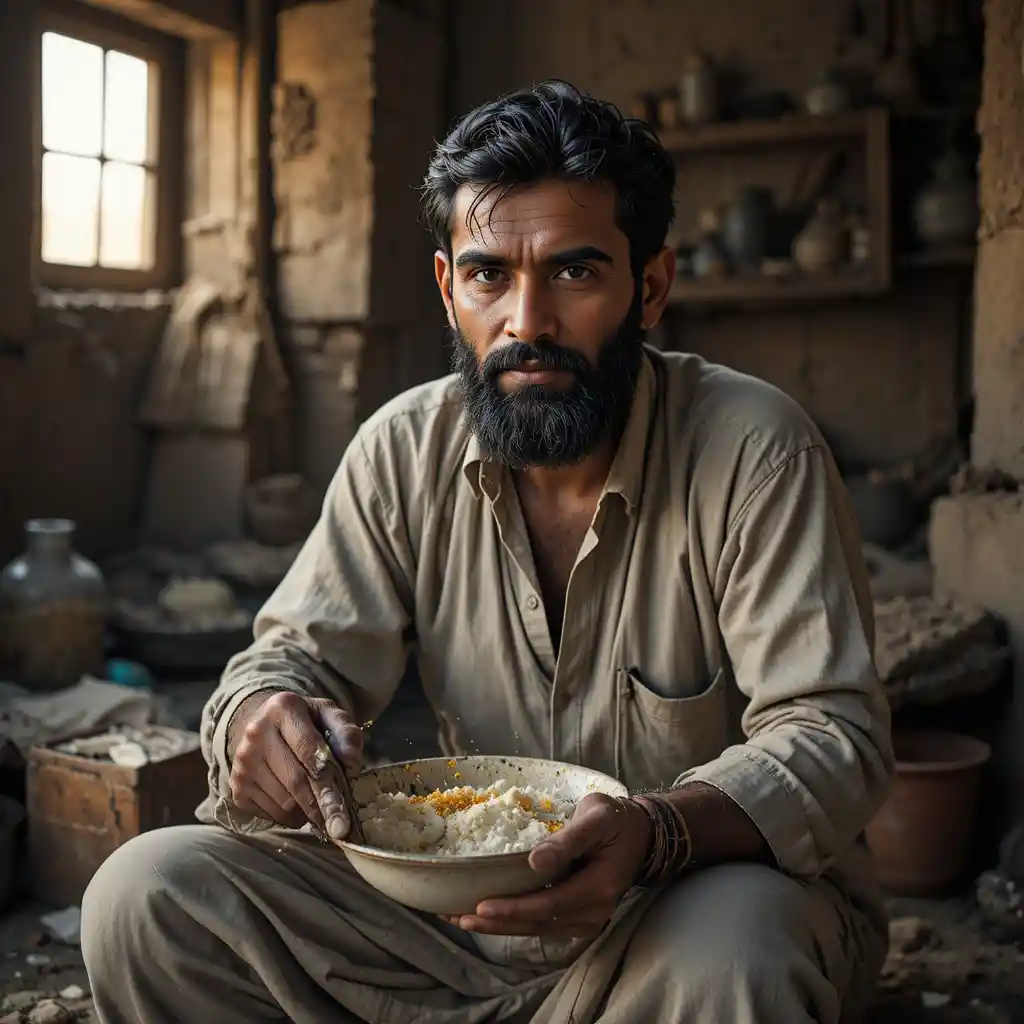
Povero lavoratore del villaggio che esce dalla sua piccola casa di fango
Prompt
In a small village near Multan, lived a man named Ahmed. He was not lazy, nor unskilled—he worked harder than most people in the village. Every morning before sunrise, Ahmed would leave his mud house, walking miles to find daily labor work.
Some days, he earned enough to bring home flour, a few vegetables, and maybe tea. Other days, he returned empty-handed.
Ahmed had three children. His eldest son, Bilal, once dreamed of going to school and becoming a teacher. But dreams are expensive. When the price of flour rose, Bilal had to leave school and join his father in work.
His wife, Ayesha, stitched clothes for neighbors. Her fingers were always busy, but the money she earned barely covered cooking oil and medicine.
One winter, things got worse. Work became scarce. Electricity bills increased. Food prices doubled. Ahmed began skipping meals so his children could eat.
One night, Bilal noticed his father pretending to eat.
“Abba, you didn’t eat, did you?” he asked.
Ahmed smiled faintly, “I already ate at work.”
But Bilal knew the truth.
That night, hunger wasn’t the only pain in the house—there was silence, worry, and a feeling of helplessness.
Yet, the next morning, Ahmed still woke up before sunrise.
Because in poverty, rest is a luxury—and hope is the only thing people cannot afford to lose.
Model
PicLumen Art V1
Date created
03/18/26 at 9:51 AM
Seed
3639214918
Guidance Scale
1
Resolution
1024 x 1024 (1:1)
Related images