Seedance 2.5 has been getting a lot of attention lately, and the 30-second generations were what made me want to try it for an actual ad instead of another short AI clip.
I used PicLumen to make a 30-second canned soda commercial. The product gave me a pretty clear direction from the start: I wanted the can to look genuinely cold, the carbonation to feel strong, and the whole video to have that hot-summer-afternoon energy.
The setup was simple enough — four friends, a neighborhood street, a basketball court, skateboards, and a few hand-drawn doodles mixed into the live-action footage. I didn’t want the doodles floating around for decoration, so every one of them had to follow something real: the can moving, a skateboard speeding up, a basketball flying, carbonation escaping, or wind moving through the scene.
The 30-Second Soda Ad Concept
The ad starts with four friends walking through a hot neighborhood after exercising. One girl stops at a vending machine, gets an ice-cold soda, presses it against her cheek, opens it, and takes a drink.
From there, the pace picks up. Skateboards, basketball, the soda being passed around, and the summer breeze all trigger small hand-drawn effects that follow the real movement. The last few seconds slow down again and finish on a clean close-up of the cold can beside the basketball court.
The Seedance 2.5 Prompt I Used
I used a fairly detailed prompt because I wanted the 30 seconds to feel like one continuous commercial instead of several AI clips stitched together.
Create a 30-second social-first canned soda commercial for TikTok, Instagram Reels, and Shorts.
Style:
Realistic summer street footage, natural young people, bright daylight, strong chilled-soda texture, and playful hand-drawn doodles.
Important: every doodle must be triggered by a real action, sound, speed, carbonation, cold sensation, wind, or impact. Doodles should follow the real motion path and disappear when the action ends.
0–5s:
A bright summer afternoon in a lively neighborhood with a vending machine, basketball court, and skate area. Four friends walk together after exercising. One carries a skateboard, one lightly dribbles a basketball, one girl wipes sweat from her forehead, and another fans themselves with their shirt. Use natural side tracking. No posing or looking at camera. The girl buys a cold canned soda from the vending machine. When the can drops into the tray, add one brief hand-drawn impact mark at the point of contact.
5–9s:
Cut to a macro shot of the cold aluminum can with realistic condensation and water droplets. The girl lightly presses the can against her cheek. A pale blue cooling line follows the real movement of the can and disappears when it stops. Extreme close-up of the tab opening. CLICK — PSHHH. Show real carbonation escaping from the can. Add simple white pressure lines and small doodle bubbles around the real fizz.
9–15s:
She takes a drink and naturally looks more refreshed. The group keeps moving. A skateboarder accelerates with short speed lines behind the wheels. Another friend spins the basketball with a simple curved doodle following the rotation. Someone jumps from a small step and brief impact marks appear beneath the shoes. Keep the real people and street scene dominant.
15–21s:
The group reaches the basketball and skate area. They casually pass and toss the soda between each other. Add short bubble trails that follow the real path of the can and disappear when it is caught. Another friend opens a cold soda with visible carbonation. A summer breeze moves hair, loose clothing, leaves, and the basketball net. Add one subtle blue-green airflow line following the real wind direction.
21–26s:
The pace becomes more energetic. Use a low-angle tracking shot as a skateboarder passes camera. Another friend shoots the basketball. Follow the real ball trajectory with one hand-drawn arc. When it goes through the hoop, briefly show “SWISH!” beside the moving net. Cut through a short sensory sequence:
tab opening, condensation sliding down the can, ice in a cooler, carbonation in sunlight, someone taking a sip, hair moving in the breeze, skateboard wheels on warm pavement, friends laughing naturally.
26–30s:
One friend places the soda beside the basketball court. Slowly move closer while the group continues talking, skating, and playing naturally in the soft-focus background. Keep the can sharp. Show the logo, cold aluminum, open tab, condensation, tiny carbonation bubbles, and sunlight reflected in the droplets. A thin pale blue doodle line follows one real condensation droplet down the can, then turns into three small bubbles that rise and disappear. Finish with handwritten text: KEEP SUMMER FIZZY.
Visual direction:
About 80% realistic live action and 20% doodle enhancement.
Use natural summer sunlight, realistic skin and light sweat, handheld tracking, low-angle movement shots, product macro shots, subtle motion blur, and light speed changes.
Avoid luxury studio styling, chrome-heavy visuals, random fruit explosions, floating liquid, meaningless product rotation, unrelated fantasy scenes, full-screen animation, excessive slow motion, random decorative doodles, and people constantly posing toward camera.
I kept the timing inside the prompt because there were quite a few things happening. Keeping everything in the same neighborhood also helped the ad feel like one scene instead of jumping between unrelated locations.
How I Made the Ad in PicLumen
1. Choose Seedance 2.5
I opened PicLumen’s AI video generator and selected Seedance 2.5.
2. Add the Prompt and Upload References
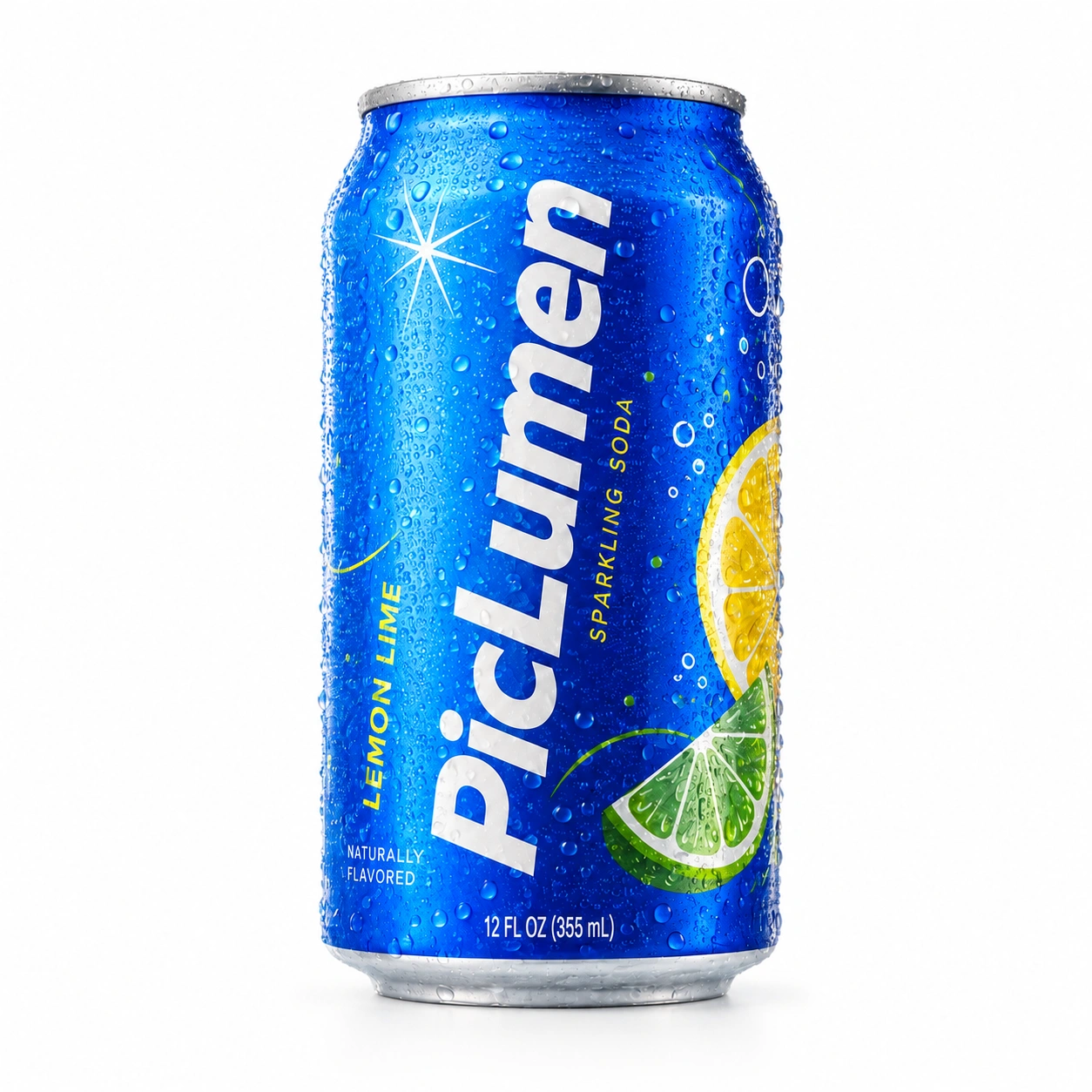
Next, I pasted the full prompt and uploaded a clean image of the soda can as the main reference.
For a branded product ad, the reference image is useful because I don’t need to keep describing the can shape, packaging, colors, and logo in text.
Seedance 2.5 can also work with additional reference images, video, and audio. I’d use a video reference for movement or camera rhythm, and audio when the pacing or sound design matters.
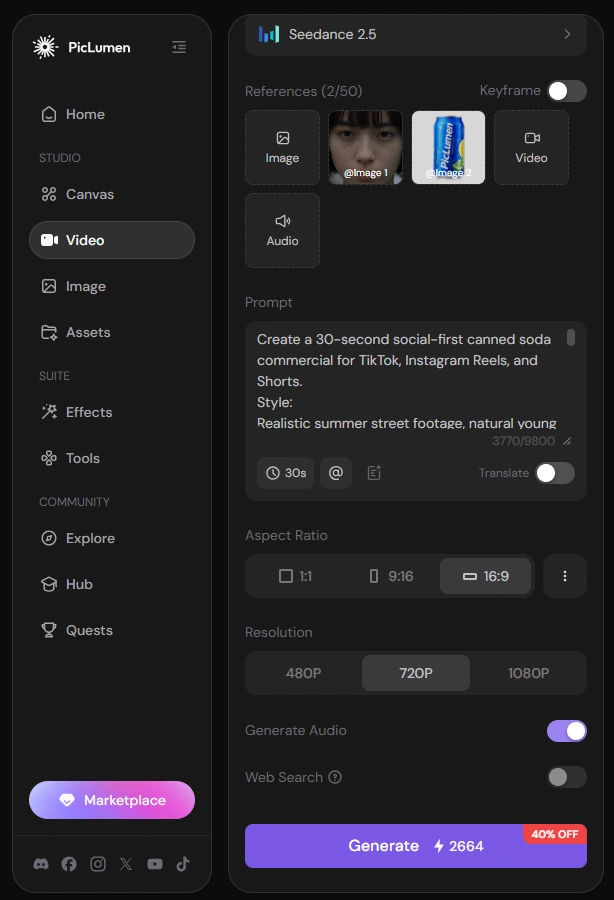
3. Choose the Right Settings
Then I picked the settings based on where I wanted to use the ad.
For this video:
4. Check Everything and Generate
Before generating, I quickly checked the prompt, reference image, aspect ratio, duration, and quality settings again.
Once everything looked right, I clicked Generate.
How I Write Seedance 2.5 Prompts for Product Ads
I usually start with whatever needs to look good on camera.
For this soda, that meant cold aluminum, condensation, carbonation, the opening tab, and the first sip. The hot basketball-court setting came naturally from there.
I also try to give the product something physical to do. The girl presses the can against her cheek, opens it, drinks from it, passes it to friends, and eventually puts it down. Those actions give the video more to work with than simply asking for someone to “hold the product naturally.”
Camera movement is easier to write the same way. I tell it what to follow. The camera follows the soda, tracks the skateboard, follows the basketball toward the hoop, or moves down with the hand placing the can beside the court.
For this ad, the doodles needed their own rules too. I didn’t just write “add fun doodles.” I described the action that triggers each one, where it appears, what direction it moves, and when it disappears.
That helped keep the graphics closer to post-production annotations instead of turning the whole video into animation.
For most product ads, I’d make sure the prompt covers:
the setting;
why the product is there;
what the person does with it;
which product details get close-ups;
how the camera follows the action;
how the video ends on the product.
More Seedance 2.5 Product Ad Prompt Ideas
Face Cream — A Quiet Hydration Change
Create a 30-second facial cream commercial in a bright bedroom during the morning.

A woman notices a slightly dry area on her cheek and opens a jar of face cream. Begin with realistic close-ups of the smooth cream texture, her fingertip picking up a small amount, and natural skin.

She applies the cream slowly. As it spreads, subtle changes appear nearby: a curled leaf opens, dry paper flowers soften, and tiny dew droplets form on glass.

Keep the changes gradual and connected to hydration. Use soft camera movement, tactile macro details, and realistic skin.

End as she closes the jar and places it beside the mirror, with her face softly visible behind the product.
I’d keep this one much slower than the soda ad. The texture of the cream and skin already gives the camera enough to look at.
Coffee — A Morning That Gradually Wakes Up
Create a 30-second coffee commercial in a quiet kitchen early in the morning.

Begin slowly with fresh coffee pouring into a cup, steam rising, a spoon touching ceramic, soft daylight, and a tired person sitting at the table.

After the first sip, gradually increase the pace. The person opens the curtains, prepares breakfast, and gets ready to leave while camera movement becomes slightly quicker.

Use close-ups of pouring, crema, steam, and hands around the warm cup. Let sound and editing carry the shift in energy.

End with the coffee cup resting on the counter as the person picks up their bag and leaves the room.
For coffee, I’d rely more on pouring, steam, ceramic sounds, and editing rhythm than graphic effects.
Headphones — Same Street, Different Sound
Create a 30-second headphone commercial on a busy city street.

Begin with a person walking through traffic, conversations, bicycle bells, and construction noise. Keep the camera close and slightly restless.

They put on the headphones.

The street remains visually unchanged, but the audio becomes controlled and focused. Camera movement gradually becomes smoother as the person continues walking with the music.

Keep the same pedestrians, traffic, and city environment. Use footsteps and passing vehicles for visual rhythm instead of fantasy effects.

End as the person stops at a crosswalk and adjusts one earcup. Move into a clean close-up of the headphones while the street stays softly active behind them.
For this one, I’d probably add reference audio. The sound change is doing most of the work.
Conclusion
This test made me realize that product ads work better when the prompt is built around real product behavior instead of effects.
What impressed me most about Seedance 2.5 was how much I could fit into one 30-second sequence without making it feel like a bunch of disconnected shots. I could keep the product visible, add several interactions, move through different beats, and still bring everything back to a clean final shot.
For this kind of social ad, that extra room is genuinely useful. I’d definitely use Seedance 2.5 again for products that have strong texture, motion, sound, or physical interaction.