載入中...

Anderson Leite
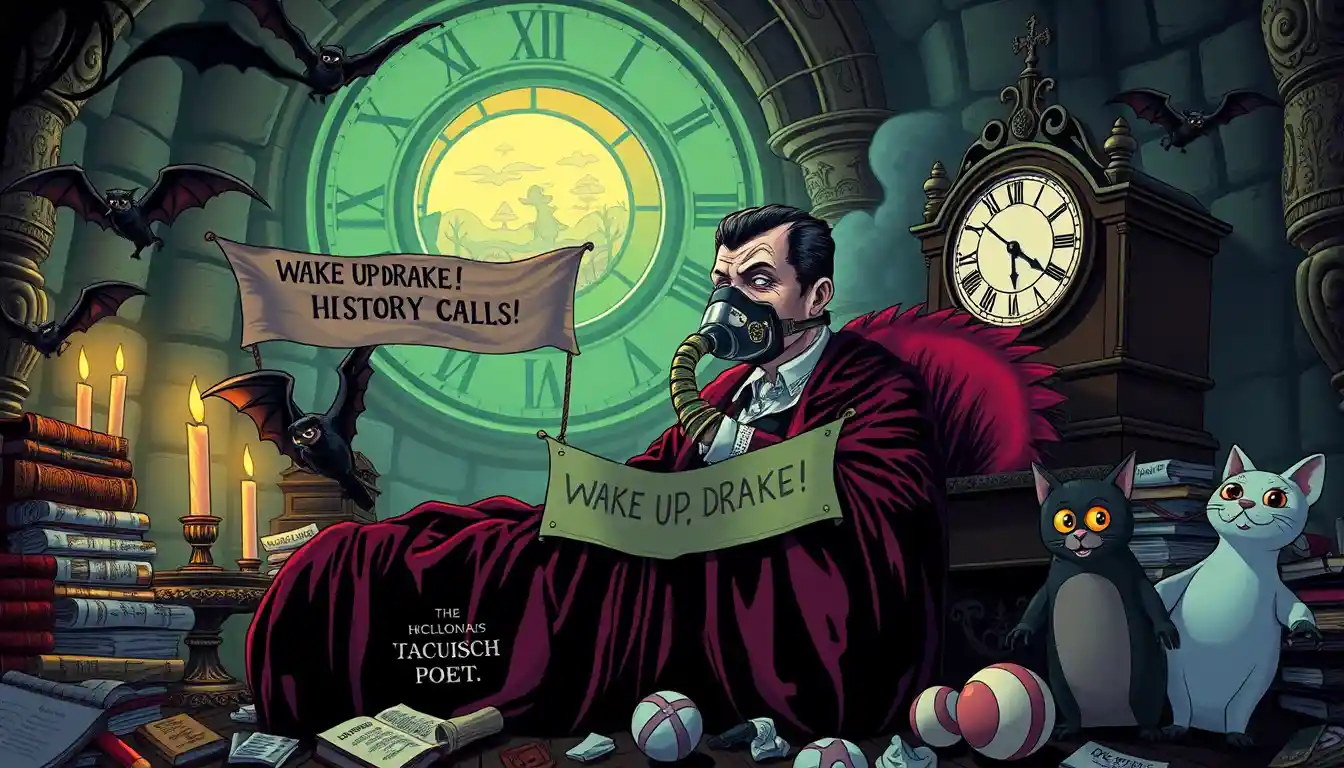
鬧鬼鐘樓裡戴著CPAP面罩的失眠吸血鬼
提示詞
In the cavernous, cobwebbed chamber of a forgotten clocktower, a thousand-year-old vampire—bedecked in ornate, moth-eaten Victorian velvet—sits bolt upright in his coffin, wearing a comically oversized, high-tech CPAP mask. The mask glows with LED lights and a tiny, steaming humidifier, while a robotic claw arm, adorned with gilded filigree, gently adjusts the pressure settings. His eyes are bloodshot, rimmed with dark circles, and his fangs are biting down on a chewable stress-relief toy shaped like a wooden stake. Beside the coffin, a chorus of tiny, sentient bats—each wearing mini top hats and monocles—holds up a banner reading, "WAKE UP, DRAKE! HISTORY CALLS!" while a somber, one-eyed raven operates a gramophone playing a lo-fi remix of "Dies Irae."
Candles flicker in eerie greens and purples, casting shifting shadows across towering stacks of dusty tomes and discarded, empty blood bags labeled "Low-Fat, No-Sugar." A grandfather clock tilted at a 45-degree angle, its pendulum draped in a mini sweater, chimes incorrectly at 13 o'clock. In the background, a massive, enchanted mirror shatters at the center, revealing a cartoonish porthole to a sunlit, pastel dreamscape where a cheerful, bikini-clad vampire peeks out, holding a margarita. On the floor, discarded pages of poetry are crumpled into balls, one of which is being batted by a plush, zombie cat with stitched-on, mismatched eyes. The scene is crowded with dark, comedic chaos, merging the macabre with the absurdly mundane, rendered in hyper-detailed, pop-surrealist colors with bold, dynamic comic-book ink lines and dramatic, cinematic lighting.
Model
Flux-Schneell
Date created
08/28/26 at 9:41 AM
Seed
2478090129
Guidance Scale
5
Resolution
1344 x 768 (16:9)
Related images