로딩 중...

papyGG
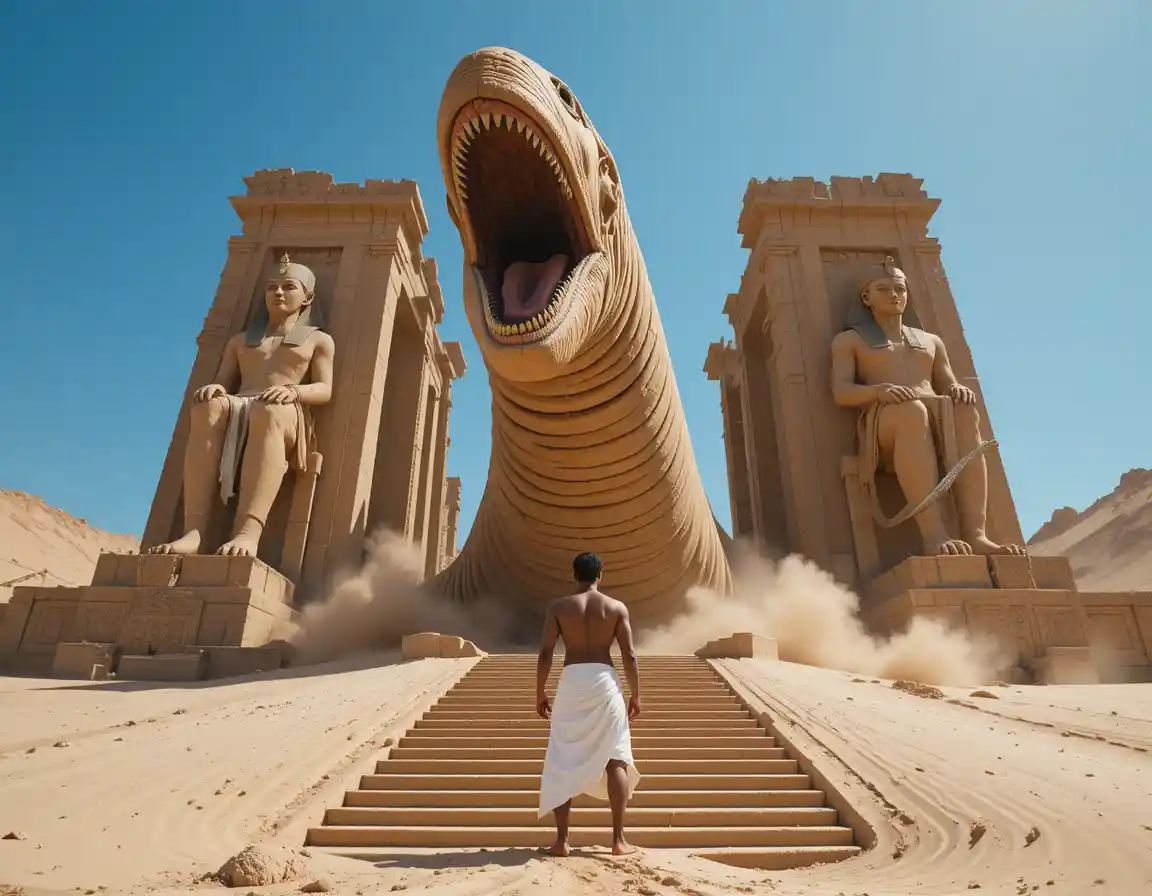
강렬한 햇빛 아래 웅장한 이집트 신전에 다가가는 남자
프롬프트
A man, his back to the viewer, stands at the bottom of a wide, reddish-brown staircase, wearing a white loincloth. He is positioned in the lower center of the frame. At the top of the stairs, within a grand temple entrance flanked by colossal seated statues of an Egyptian pharaoh, a regal figure wearing ornate golden headwear and a draped golden robe stands centrally. Flanking this figure are two men, also in white loincloths and white sashes draped over their shoulders, standing on either side of the entrance. To the right of the central figure, a smaller, youthful figure, also in a white loincloth, stands slightly behind and to the side. The scene is bathed in bright, warm sunlight, casting long shadows from the statues and architectural elements. The atmosphere is one of ancient grandeur and solemnity. The perspective is a low-angle shot, emphasizing the scale of the architecture and the statues. The overall style is photorealistic, capturing the texture of stone and fabric. A colossal sandworm, a giant segmented creature, emerges from sand dunes under a clear blue sky. Its head is raised and facing the viewer, its massive mouth open, revealing rows of sharp teeth. The worm's body, textured with a ribbed, leathery hide in shades of beige and light brown, is partially submerged in sand, kicking up a significant cloud of dust and debris around it. The environment is a barren desert landscape with rolling sand dunes stretching into the background. The composition is a medium shot, with the worm dominating the center and right portions of the frame, its immense scale emphasized by the vastness of the desert. The lighting is bright and harsh, characteristic of a desert sun, casting sharp shadows. The overall atmosphere is epic and imposing, conveying the raw power of a creature in its natural, harsh environment.
Model
PicLumen Art V1
Date created
04/20/26 at 5:53 PM
Seed
9999999999
Guidance Scale
1
Resolution
1152 x 896 (5:4)
Related images