로딩 중...

Brane Frankovic
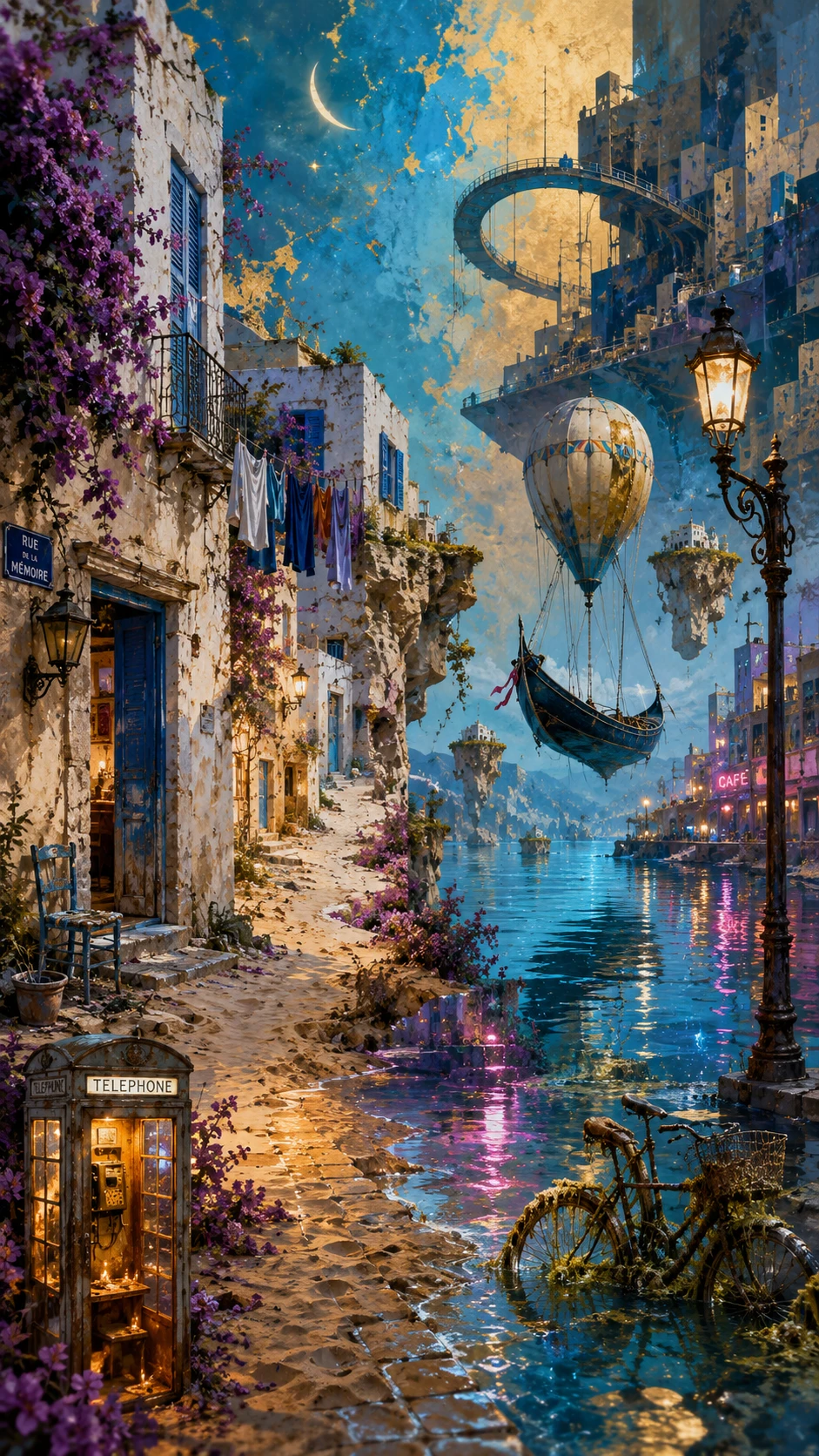
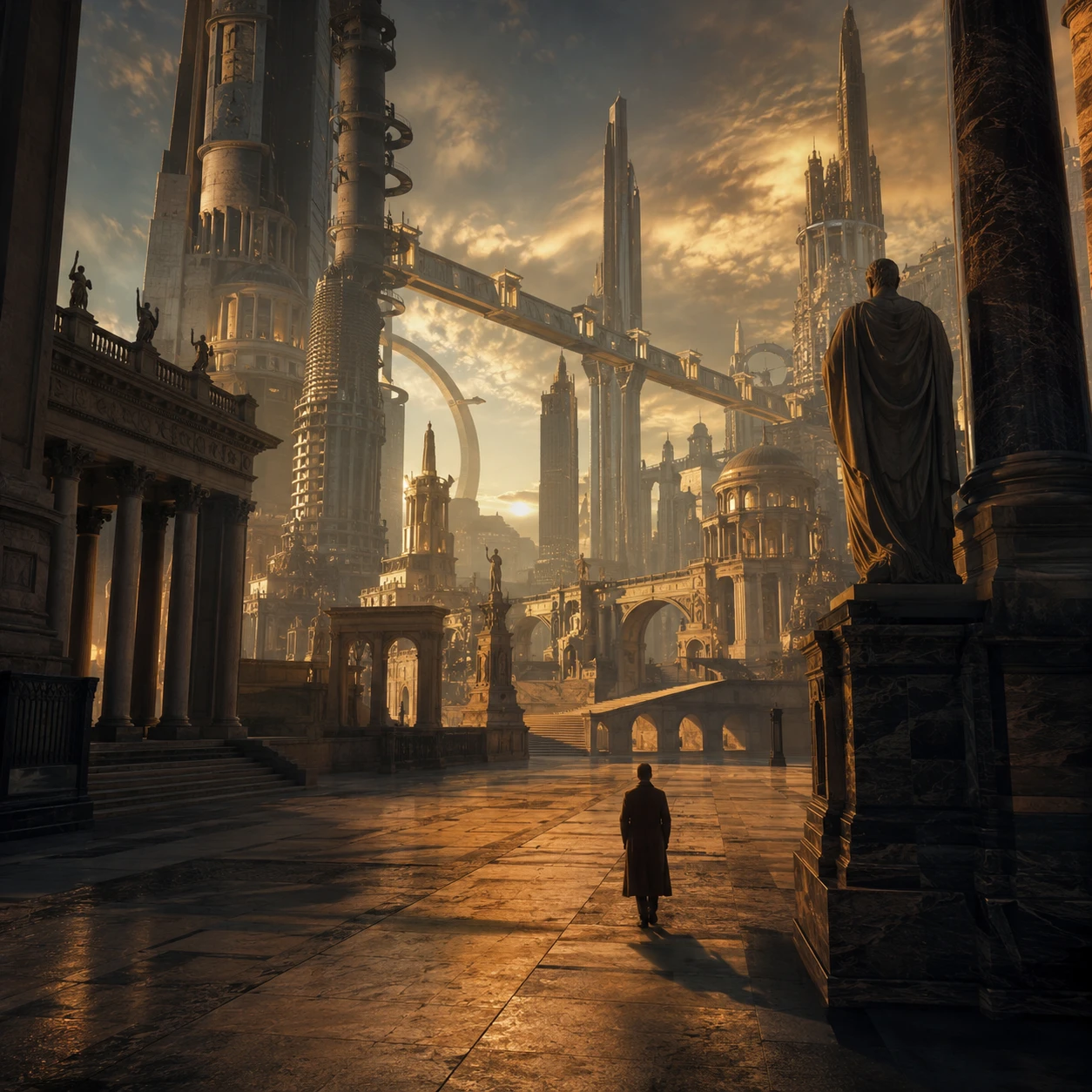
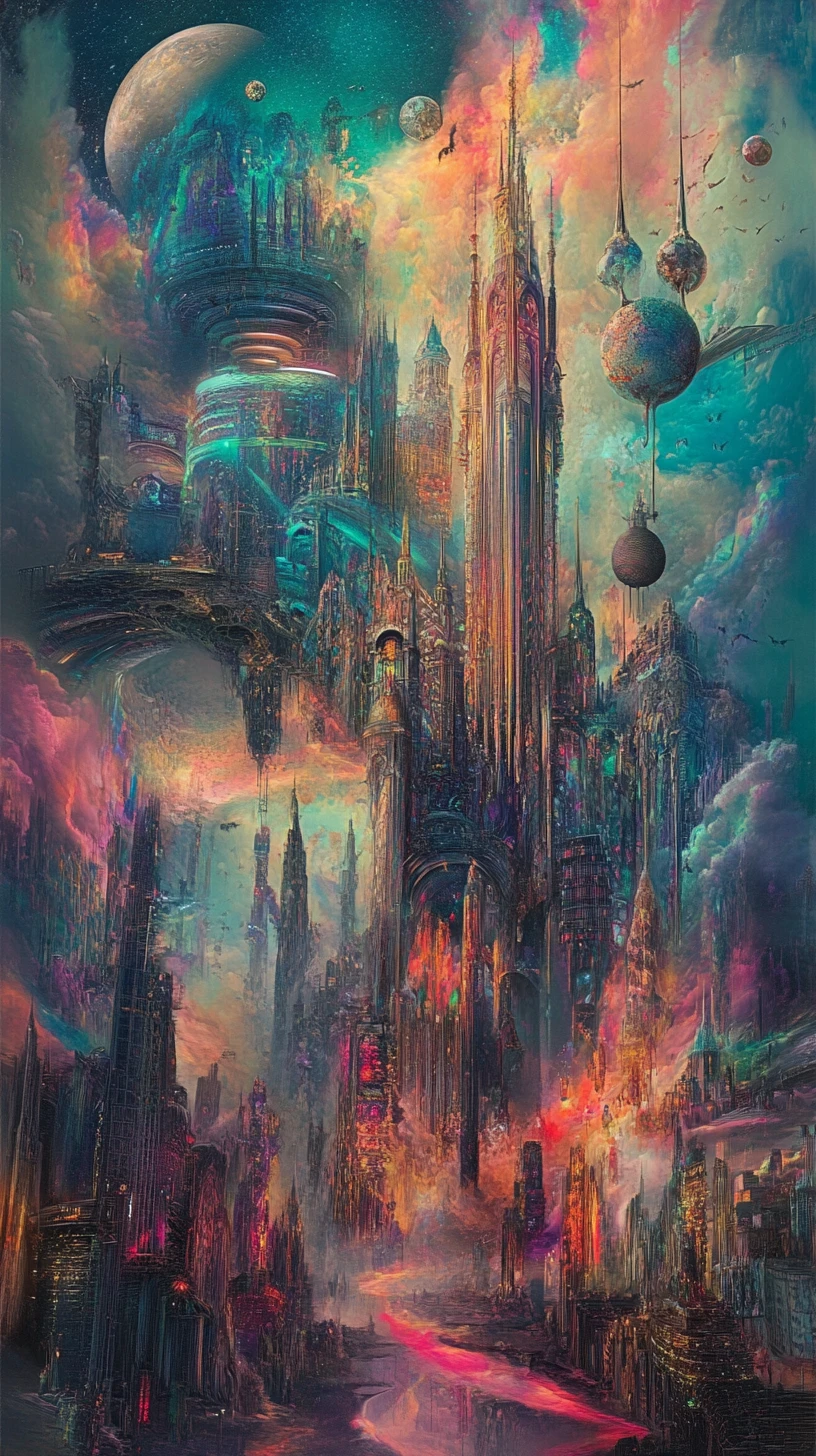
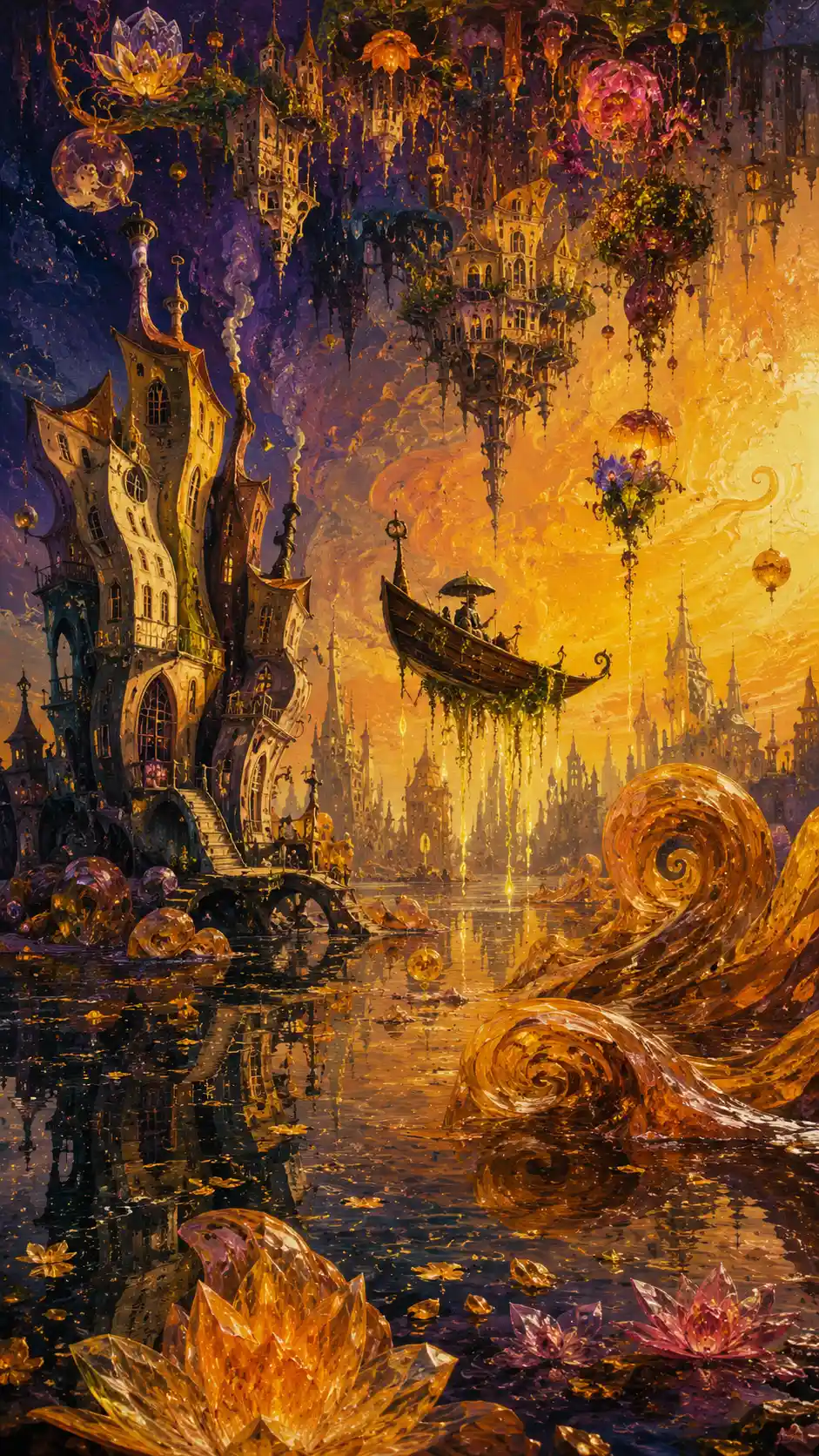
비틀린 액체 언덕 위에 떠 있는 초현실적 도시 풍경
프롬프트
a fever-dream landscape where gravity has dissolved entirely, leaving rolling hills of liquid amber twisting into impossible corkscrews, their surfaces gleaming like molten glass under a sky split between bruised indigo and molten gold. Warped towers rise from the water’s edge—facades bending like wet parchment, spiraling chimneys dissolving into smoke, their reflections doubling the delirium in the dark mirror of the water below. Upside-down palaces and floating gardens drift in the inverted sky, their bioluminescent flowers pulsing with hues of saffron, plum, and emerald, petals thin as vellum and glowing from within. The scene is carved by cinematic light—thick impasto ridges defining the hills, while distant spires blur into mist, softened as if viewed through rain-streaked glass. A lone wooden boat drifts midair, untethered, its hull trailing vines of neon algae that drip like liquid fire. The air shimmers with heat haze, distorting the already fractured horizon where a second, inverted city floats impossibly above the first. Textures clash and harmonize: rough bark against slick oil-water, crisp crystal flowers melting into their own reflections. The light is golden, diagonal, casting sentient shadows that stretch and recoil like living things. Every inch thrums with electric tension—a world where physics is a suggestion, fairy tales drown in oil paint, and dreams wake up delirious. Captured in hyper-detailed 8K with a Canon EOS R5, the image is a collision of Wes Anderson’s symmetry and Picasso’s fractured perspectives, rendered in Amanda Sage’s psychedelic glow—brutal, beautiful, and teetering on the edge of collapse.
Model
GPT-Image-2
Date created
06/19/26 at 9:52 AM
Seed
895863932
Guidance Scale
7.5
Resolution
941 x 1672
Related images