Loading...

7AiKiwi
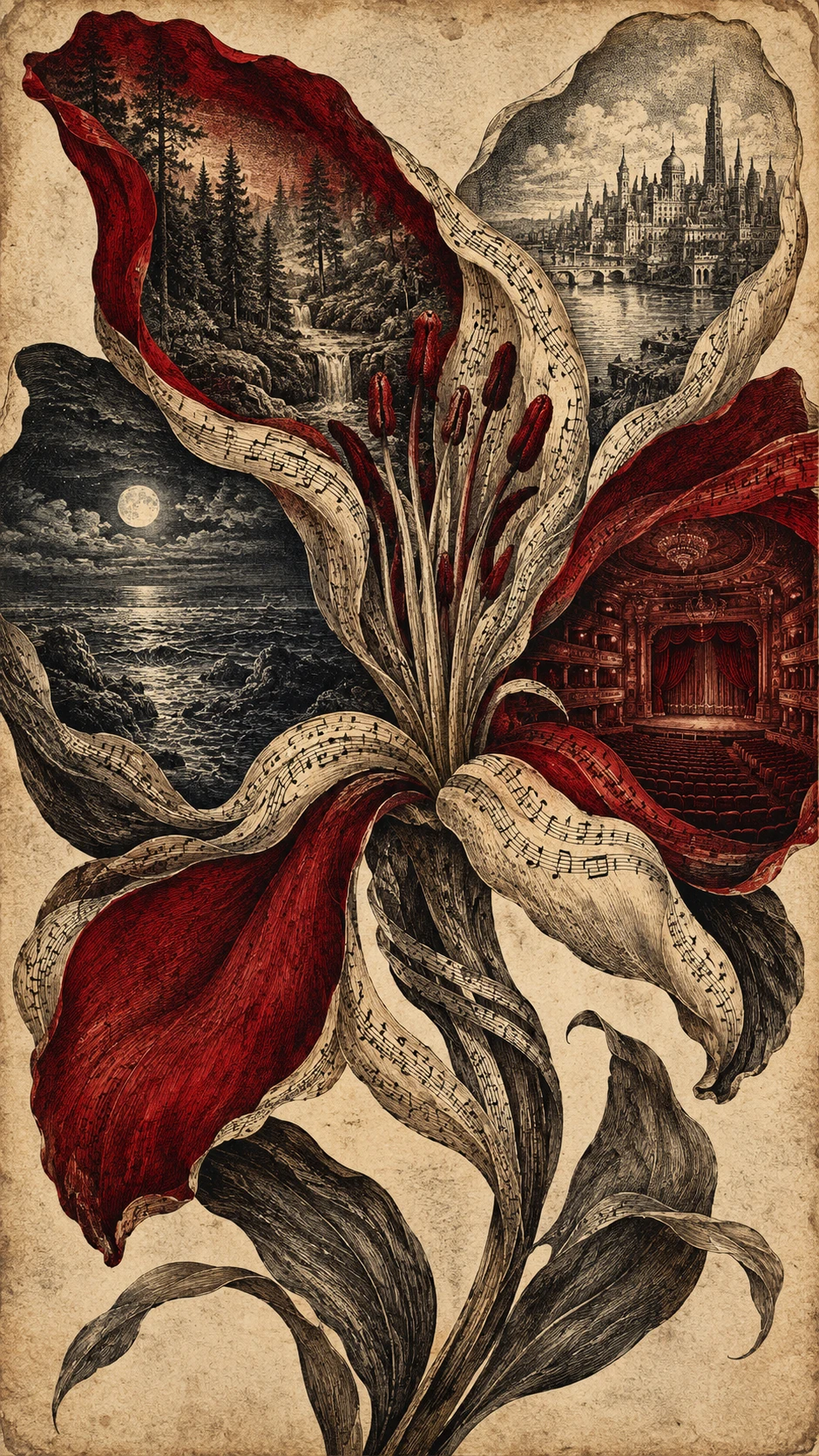
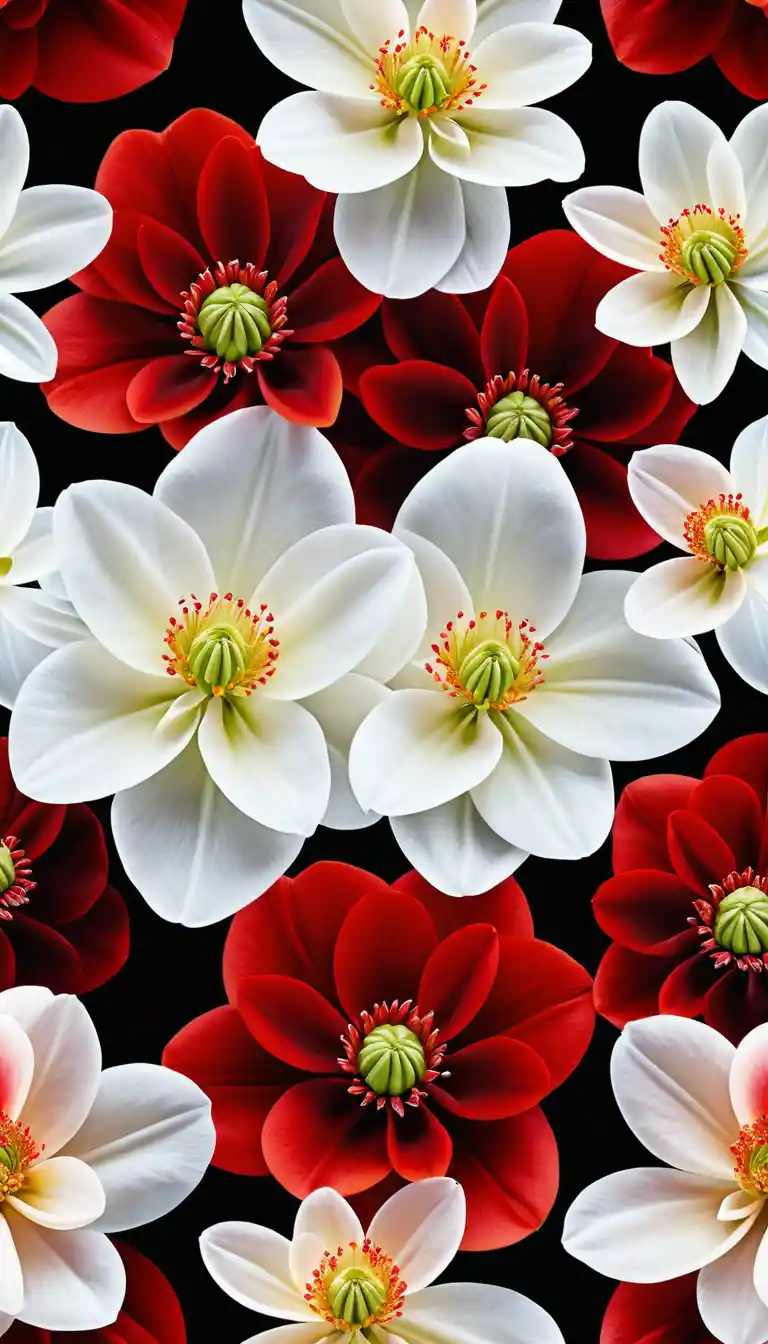
A scarlet and cream double flower with bold black petal markings
Prompt
Ultra-realistic vertical 9:16 macro photograph of a lush flowering plant growing naturally outdoors, covered with many large, fully open, extremely full flowers and several fresh buds. Every flower, including all surrounding flowers, must have the same dense multi-layered anatomy.
Each blossom is ONE normal continuous flower, built from many successive overlapping petals growing naturally from the same center. The petals progress smoothly from the center outward and downward, with each petal overlapping the next like natural flower petals. The flower must never look assembled from separate colored layers.
The center contains many densely packed vivid scarlet-red petals, broad, rounded, softly scalloped and heavily overlapping. As the blossom becomes wider, the red petals continue naturally downward and outward, with the lowest red petals overlapping across the petals beneath them.
Surrounding and supporting the red petals are many layers of broad creamy-white petals, also densely overlapping and staggered naturally. These white petals must be arranged at different heights and offsets, never as neat concentric circles. Each successive petal partially covers the petal below it, producing one deep, continuous flower structure.
The transition between red petals and white petals must be irregular and seamless. There must be no straight boundary, no circular boundary, no visible shelf, no separate red cap, no separate white base, and absolutely no alternating red-white-red-white rings.
The blossom should look exactly like one naturally layered double flower from the top center all the way to the lowest outer petals, with no structural break anywhere.
Every creamy-white petal has one large deep black velvety blotch at its inner base. The black blotch is broad, solid, dense and almost pure black, occupying a substantial portion of the inner petal. It begins wide and heavy near the petal base and extends outward into an irregular rounded-to-tapered brush-like shape.
The black must look like a rich solid ink blot painted into the petal, not thin veins, not narrow spikes, not stripes, not tiny triangles and not feathery black lines. Its outer boundary can be softly irregular and slightly feathered, but the main black area remains thick, filled-in and strongly saturated.
Each black blotch is naturally different: some larger and broader, some slightly shorter, some asymmetric, but all are large, heavy and clearly visible. The outer portion and scalloped edge o
Negative Prompt
NSFW, watermark
Model
PicLumen Realistic V2
Date created
10/11/26 at 8:28 AM
Seed
2054294130
Guidance Scale
11
Resolution
768 x 1344 (9:16)
Related images