Loading...

RED.
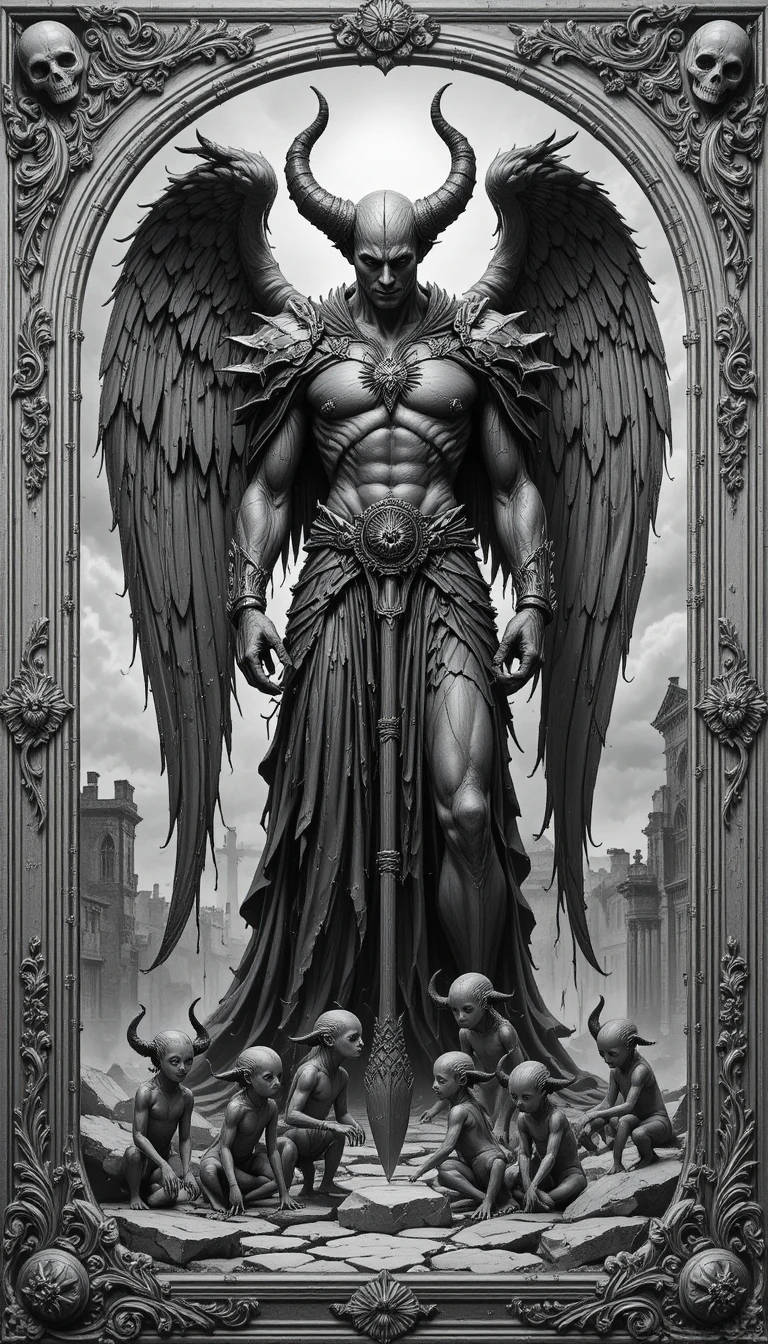
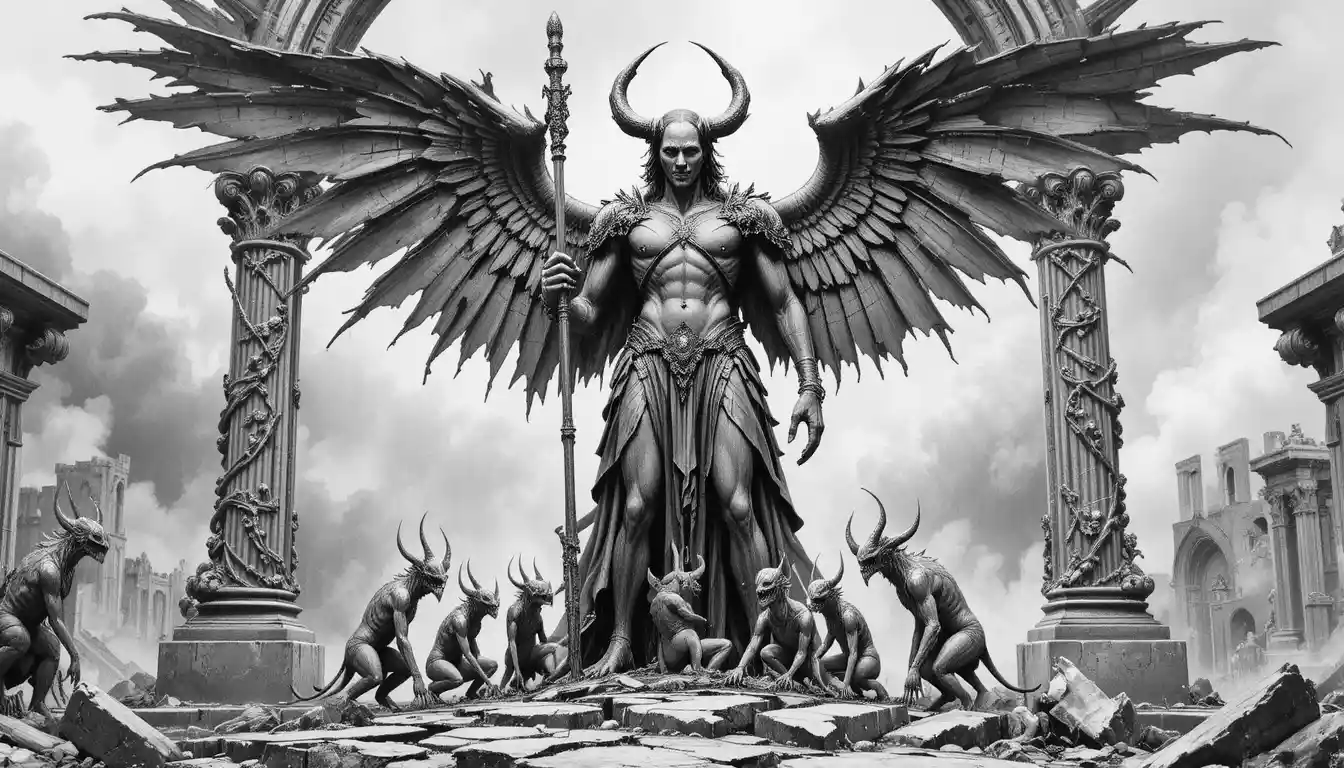
Dark fallen angel with broken wings in graphite drawing
Prompt
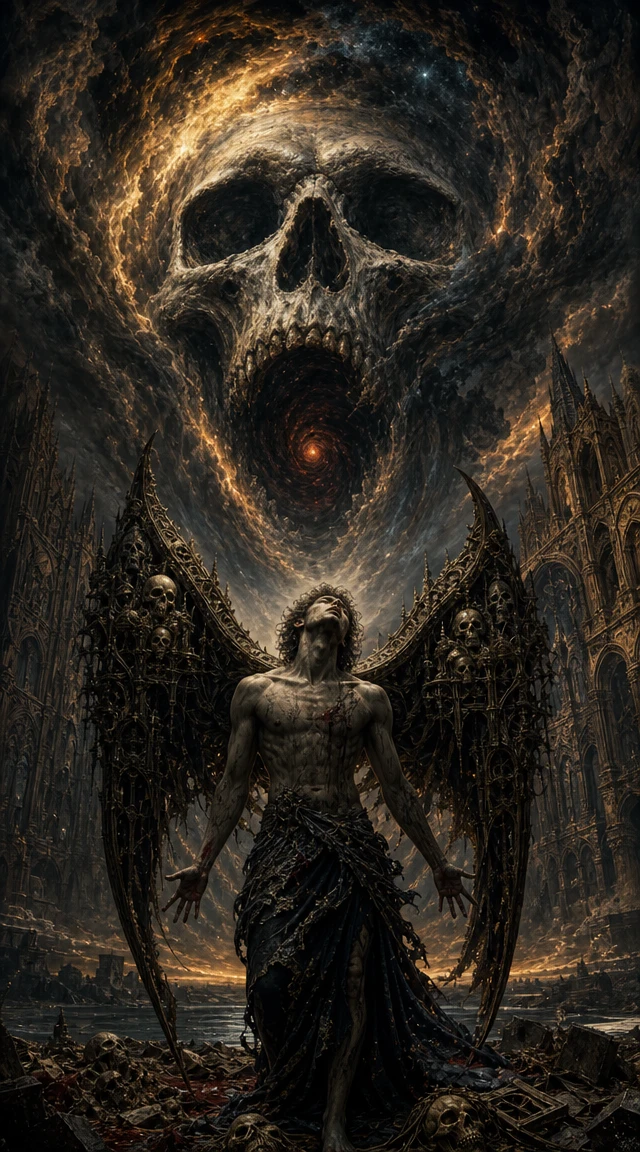
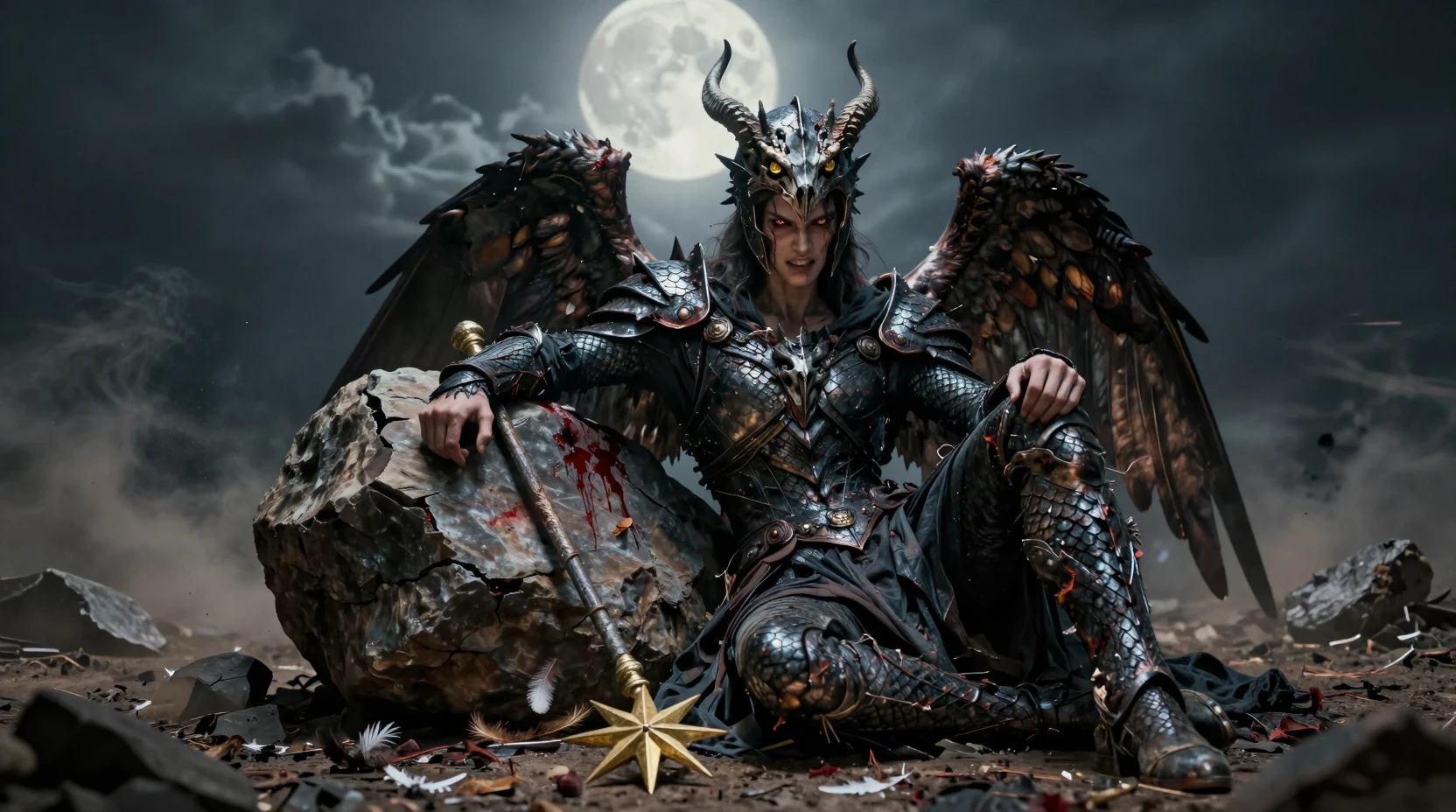
A gigantic dark angel in gothic style, entirely drawn in ultra-detailed graphite pencil on rough textured paper. The angel is tall, muscular, and majestic, with a sculpted torso and a cold, tormented expression. His enormous wings are damaged and broken, with torn feathers worn away by time. From his head emerge large hooked horns, dirty, cracked, and uneven, resembling those of an ancient fallen demon.
He wears fragments of worn medieval armor decorated with dark engravings. He holds a long spear vertically against the ground. The atmosphere must feel dark, tragic, and sacred.
At the base of the figure, instead of children, there are seven demonic cubs gathered around the angel’s feet. The creatures are small, sinister, and animal-like, with thin distorted bodies, damaged membranous wings, twisted horns, glowing hollow eyes, claws, tails, and unsettling expressions. Some crouch on the stone floor, others climb over broken rocks or stare upward toward the angel. They should look like infernal offspring born from darkness, both terrifying and strangely tragic.
The entire illustration is enclosed within a large, richly detailed gothic frame, sculpted with baroque ornaments and dark symbols: withered roses, thorns, weathered skulls, broken wings, fallen angelic faces, and ancient intertwined carvings. The frame must look like an integral part of the artwork itself, also rendered in graphite pencil with deep shadows and realistic engraved textures.
Background with stormy skies, fog, and barely visible gothic ruins. Dramatic black-and-white lighting, intense chiaroscuro contrasts, realistic pencil shading, Renaissance dark fantasy illustration style. Extremely high anatomical detail and realistic textures on feathers, skin, horns, stone, and the demonic cubs. Cinematic vertical composition.
Model
PicLumen Art V1
Date created
05/18/26 at 9:40 AM
Seed
9802466525
Guidance Scale
1
Resolution
1344 x 768 (16:9)
Related images