Making a polished short film once required a full crew, costly gear, and weeks of post-production. Today, AI tools let solo creators write, storyboard, shoot, and edit a complete film in hours — no film degree or professional studio needed.
We tested 10 practical AI tools for short-form storytelling — spanning pre-production, full video generation, and short drama streaming — across ease of use, output quality, pricing value, and workflow completeness, to help you skip trial-and-error and pick the right fit.
At a Glance: Best AI Tools for Short Films Comparison Table
Tool Name | Type | Best For | Core Features | Free Tier | Starting Price | Max Output Length |
LTX Studio | AI Film Creation | Visual story planning & script-to-storyboard | Script-based storyboards, reusable assets, timeline editor | Free trial with 3 limited exports | $19/month | Up to 2min per clip, 1080p |
Google Flow | AI Film Creation | Building scenes from visual references | Multi-input scene generation, style-consistent shots, camera control | Limited free credits for new users | $29/month | Up to 30s per clip |
Runway | AI Film Creation | Cinematic visuals & custom production workflows | Gen-3 video generation, custom pipelines, post-production tools | 125 free credits/month (watermarked) | $12/month | Up to 16s per Gen-3 clip |
PicLumen | AI Film Creation | Full AI drama episodes in one workspace | Script, assets, storyboard, shots, editing all-in-one | Free tier with watermarked full-episode exports | $24.99/month | Full episodes up to 10min |
Seko | AI Film Creation | Conversation-driven short film development | Agent-led scripting, storyboards, sound, built-in editing | Free beta access to core features | $32/month | Up to 5min per project |
SJinn | AI Film Creation | Recurring character story series | Production planning, reusable character library, series management | Free trial with 3 projects | $27/month | Up to 3min per episode |
Elser AI | AI Film Creation | Anime & narrative style short videos | Story development, character cast, storyboard, anime generation | Free tier with 2 short clips/month | $21/month | Up to 4min per video |
ReelShort | Short Drama Streaming | Binging existing short drama series | Massive short episodic library, algorithm recommendations | Free with ads, daily free episodes | $9.99/month premium | Full series episodes |
DramaBox | Short Drama Streaming | Browsing original mini series by genre | Genre filtering, watchlist, exclusive original content | Free with ads | $7.99/month premium | Full mini series |
NetShort | Short Drama Streaming | Multi-language drama viewing | Original & licensed series, multi-language subtitles | Free with ads | $8.99/month premium | Full episodes |
How We Tested & Ranked These AI Short Film Tools
We evaluated every tool on real short film projects, scoring them on:
End-to-end workflow capability (from script to final cut)
Visual consistency and output quality
Free tier value and transparent pricing
Learning curve for first-time users
Tools are grouped by use case, not a universal ranking — the "best" tool depends entirely on what you're making.
Use this table to quickly compare every tool side-by-side, and jump to the full reviews for details.
Best AI Tools for Short Films: In-Depth Reviews
AI Short Film Creation Tools (7 Tools)
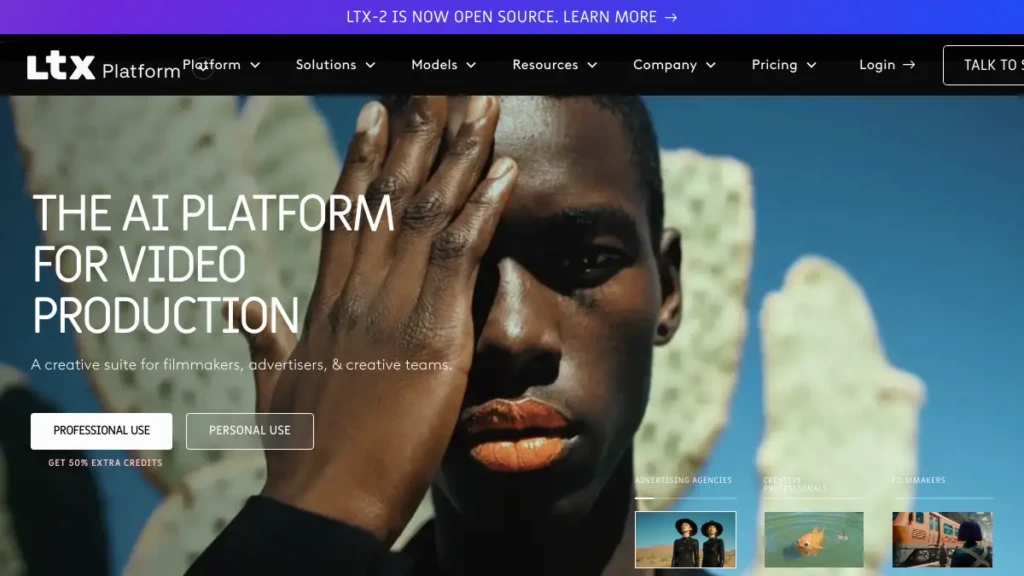
LTX Studio: Best for Visual Story Planning & Script-to-Storyboard
LTX Studio focuses on pre-production visualization, turning written scripts into visual storyboards automatically. It excels at helping you map out shot language before you start generating footage.
Key features
Import a full script and auto-split it into individual shots with visual storyboards
Reusable character and location asset library for consistent visuals across projects
Timeline editor to adjust shot duration and sequence
Exportable storyboard files that work with both AI generation tools and live-action crews
Pricing: Free trial with 3 watermarked storyboard exports. Paid plans start at $19/month for unlimited projects, 1080p exports, and full asset library access.
Limitations: It is built first for planning, not for final cinematic output. Raw generated footage quality is solid but not top-tier, so most creators pair it with a dedicated generation tool for finishing.
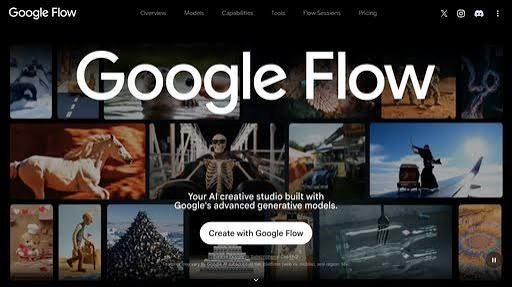
Google Flow: Best for Building Scenes From Visual References
Google Flow stands out for its multi-input scene generation. You can feed it a reference image, text prompt, or even a video clip, and it will produce style-consistent consecutive shots that match your reference.
Key features
Supports text, image, and video frame inputs for scene creation
Strong shot-to-shot consistency for multi-angle scenes of the same location
Adjustable camera motion controls (pan, zoom, dolly)
Batch generation of different angles for the same scene
Pricing: New users get a one-time free credit bundle. Subscription plans start at $29/month with a monthly credit allocation.
Limitations: It has no built-in script or storyboard management. It works best for generating individual scenes, not for building an entire short film from scratch in one place.
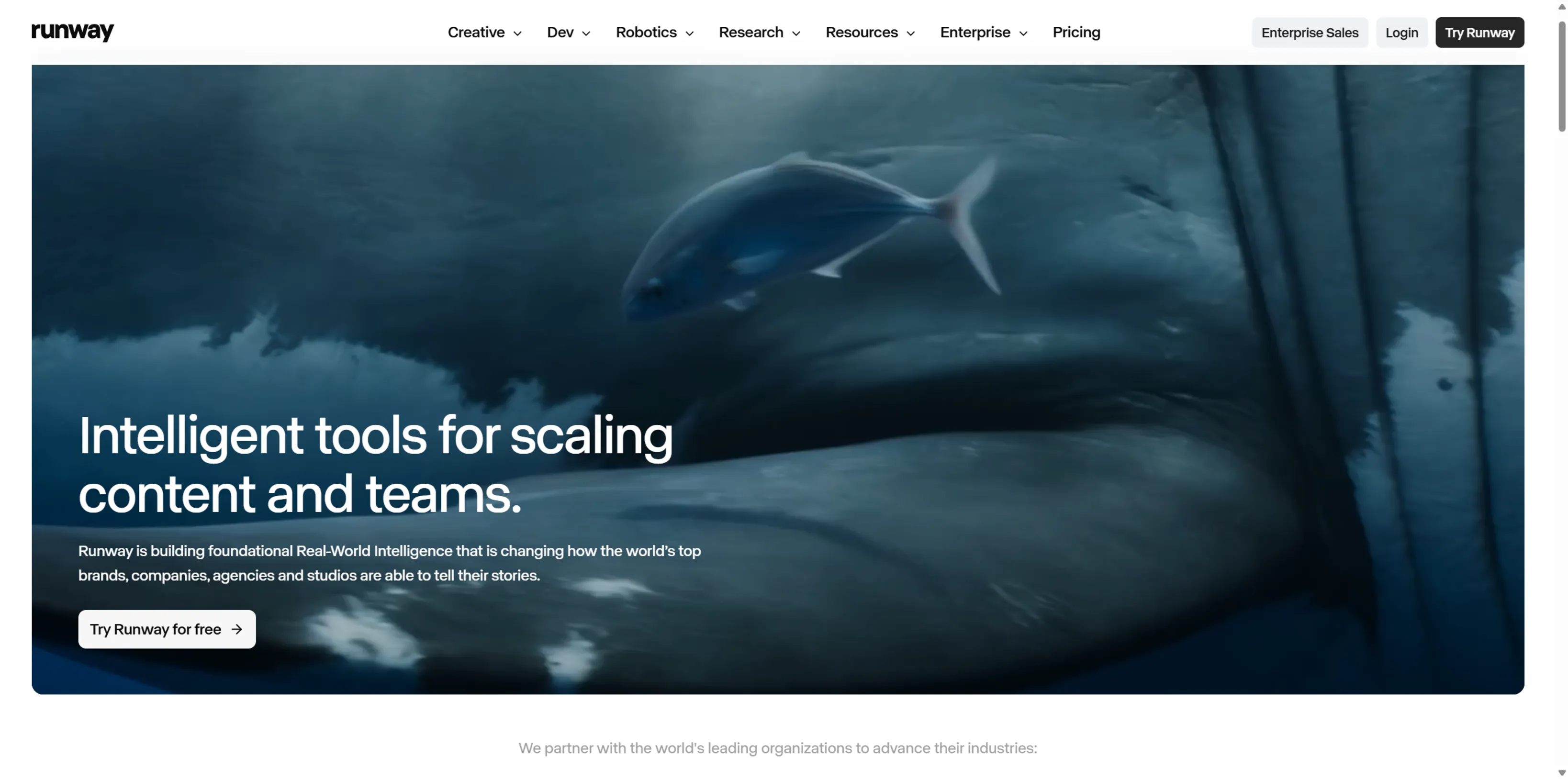
Runway: Best for Cinematic Visuals & Custom Production Workflows
Runway is one of the most established names in AI filmmaking. Its Gen-3 model delivers industry-leading cinematic image quality, and its biggest strength is customizable generation workflows that automate repetitive post-production tasks.
Key features
Gen-3 text-to-video and image-to-video with cinematic lighting and camera movement
Custom workflow builder to chain multiple AI tools together for batch output
Built-in post-production tools: rotoscoping, frame interpolation, inpainting, and upscaling
Team collaboration support for small crews
Pricing: Free plan includes 125 monthly credits with watermarked exports. Basic plan starts at $12/month with 625 credits; Pro plan is $28/month with higher credit limits.
Limitations: It has a steeper learning curve if you want to use custom workflows. Individual clip length is short, so longer films require manual stitching.
.webp)
PicLumen: Best for Making Full AI Drama Episodes in One Workspace
PicLumen is built as an end-to-end workspace for AI drama creation. Scriptwriting, asset management, storyboarding, shot generation, and final editing all live inside the same tool — no file exports between apps required.
Key features
Built-in AI script assistant optimized for short drama structures
Unified character and location asset library to keep visuals consistent across an entire episode
Drag-and-drop storyboard editor to rearrange shots on a timeline
Native editing tools for trimming clips, adding subtitles, and layering background music
Supports full vertical drama episodes up to 10 minutes long
Pricing: Free tier gives full access to the core workflow with watermarked exports. Paid plans start at $24.99/month for watermark-free 1080p exports and increased asset limits.
Limitations: Hyper-realistic cinematic quality falls slightly behind specialized tools like Runway. It is tuned primarily for web and vertical short drama styles, not festival-grade cinematography.
.webp)
Seko: Best for Conversation-Driven AI Short Film Development
Seko takes an agent-led approach to filmmaking. Instead of manually adjusting settings and breaking down shots, you describe your story in natural language, and its AI agent walks you through script, storyboard, sound, and final edit step by step.
Key features
Conversational, chat-based creation workflow
AI agent automatically optimizes script structure and shot pacing
Built-in AI voiceover and sound effect generation
Mid-project edits: adjust plot or visuals at any point through conversation
Pricing: Core features are free during public beta. Full subscription plans start at $32/month for unlimited projects and HD exports.
Limitations: Fine control over specific visual details is limited. The AI makes most creative decisions, so it works better for fast demos than for projects with very specific shot requirements.
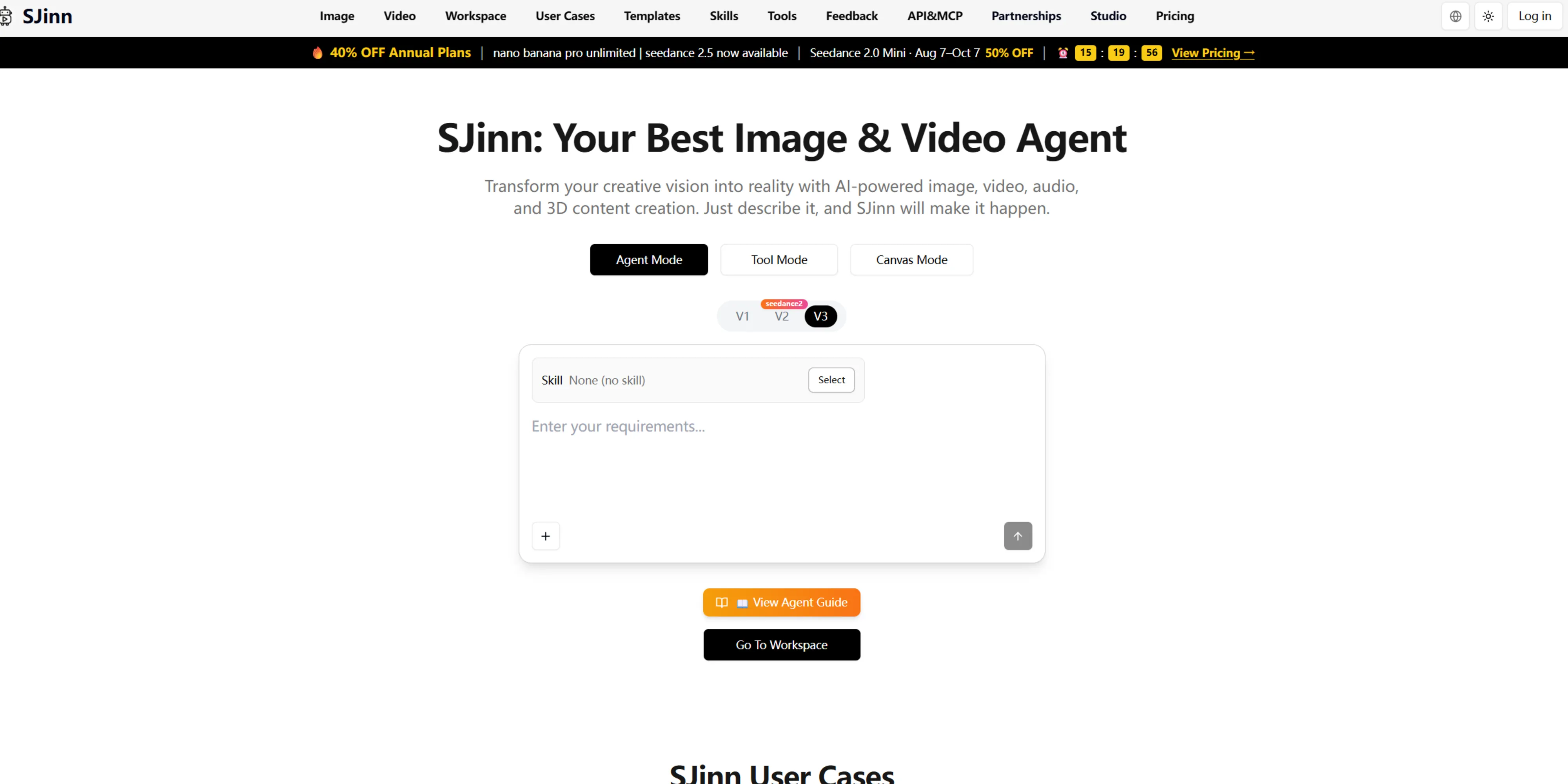
SJinn: Best for Recurring Character Stories & Production Planning
SJinn specializes in reusable character libraries, making it ideal for serialized short content. You build a character once, and you can drop that same consistent character into every episode of your series without redesigning them each time.
Key features
Dedicated character asset library with saved appearance, outfits, and character bios
Built-in production planning tools for scheduling entire seasons
Batch storyboard generation for multiple episodes
Built-in continuity check to avoid plot or design inconsistencies across a series
Pricing: Free trial supports 3 characters and 3 projects. Paid plans start at $27/month for unlimited characters, projects, and exports.
Limitations: Individual shot quality is average. Its value is in series consistency and production management, not standalone single-film visual quality.
.webp)
Elser AI: Best for Anime & Narrative Style Short Videos
Elser AI is purpose-built for anime and narrative stylized video. Every part of the workflow — character design, storyboarding, and final generation — is optimized for anime art styles, so you don't waste time tweaking style prompts.
Key features
Pre-built anime art style presets, from Japanese series style to western comic aesthetics
AI character creator with saveable character profiles
Full story arc development tools to structure narrative pacing
One-click generation of full storyboarded anime shorts
Pricing: Free plan includes 2 short watermarked clips per month. Paid plans start at $21/month for watermark-free HD exports.
Limitations: It only performs well for stylized and anime content. Realistic live-action style output is weak compared to general-purpose tools.
AI Short Drama Streaming & Discovery Platforms (3 Platforms)
.webp)
ReelShort: Best for Binging Existing Short Drama Series
ReelShort is one of the most popular vertical short drama platforms in Western markets, focused on fast-paced, high-twist micro-dramas. It works both as entertainment for viewers and as a reference tool for creators studying hit drama formulas.
Key features
Large library of short dramas across romance, thriller, fantasy, and drama genres
1–2 minute episodes designed for quick viewing
Offline download support
Algorithm-driven recommendations for similar content
Pricing: Free with ads and a daily limit of free episodes. Premium subscription is $9.99/month for ad-free viewing and full series unlocks.
Limitations: Content leans heavily into formulaic, mass-appeal tropes. Original and experimental content is rare.
.webp)
DramaBox: Best for Browsing Original Mini Series by Genre
DramaBox focuses on original mini-series with deep genre categorization. It is the easiest platform to browse if you're looking for reference content in a specific niche.
Key features
Granular genre and sub-genre filtering
Watchlist feature to track and follow series
High share of exclusive original content
Cross-device progress sync
Pricing: Free with ads. Premium membership starts at $7.99/month for full access to original content.
Limitations: New hit series release slower than larger platforms.
.webp)
NetShort: Best for Multi-Language Short Dramas (Browser & App)
NetShort stands out for its multi-language support. It hosts both original and licensed dramas with subtitles and dubs in multiple languages, making it useful for cross-border creators and international audiences.
Key features
Subtitles and dubs available in English, Spanish, French, and more
Works on both web browser and mobile app
Global content library with dramas from multiple regions
Cast-to-TV support
Pricing: Free with ads. Premium plan is $8.99/month for HD quality and full language access.
Limitations: Content libraries for less common languages are smaller.
How to Choose the Right AI Short Film Tool for Your Project
Best for First-Time AI Short Filmmakers (Beginner-Friendly Picks)
If this is your first AI short film, prioritize all-in-one tools to avoid juggling multiple apps. PicLumen is the strongest pick for beginners — it walks you through script to final cut in one workspace with a clear, guided interface. If you want even less hands-on work, Seko's chat-based workflow lets you make a film without learning any editing controls.
Best for Storyboarding & Pre-Production Planning
For pre-production work that will later be handed off to a live-action crew or another generation tool, go with LTX Studio. Its script-to-storyboard accuracy is the most reliable in this roundup. Pair it with Google Flow if you need to generate batches of visual reference shots for your shot list.
Best for Cinematic Effects & Post-Production Polish
If visual quality is your top priority, Runway is the clear choice. Its Gen-3 model delivers the best lighting, camera movement, and cinematic texture of any tool on this list. Use it for final shot generation and post-production polish once you have your storyboard locked in.
Best for Full-Workflow AI Agent Filmmaking
If you want to minimize manual work and let AI handle most creative decisions, use Seko. Its conversation-based agent handles scripting, shot breakdown, sound, and editing automatically. It's ideal for rapid prototyping and creators with no editing background.
Best for Anime & Stylized Narrative Shorts
For anime and stylized content, Elser AI will save you hours of prompt engineering. It is purpose-built for narrative anime, and its character consistency is far better than generic AI video tools.
Best for Watching & Discovering AI Short Dramas
For casual viewing and studying popular drama tropes, ReelShort has the biggest library and fastest updates. For niche genre original content, use DramaBox. For multi-language content, go with NetShort.
Best Free AI Tools for Short Film Makers (Zero Budget Picks)
You can make a complete 1–2 minute short film for $0:
Runway Free gives you the highest-quality free generation available
PicLumen Free lets you run through the entire end-to-end workflow
Seko's free beta gives full access to conversational agent filmmaking
AI Short Film Pricing: Cost Breakdown & Budget Toolkits
Free Tier Limits: What You Can Make for $0
Nearly every tool on this list has a usable free tier. With zero budget, you can easily produce a 1–2 minute finished short film:
Runway's 125 monthly credits generate roughly 4–6 sixteen-second clips, enough for a 1-minute edited film with watermarks
PicLumen's free tier supports full 3-minute drama episodes with watermarks, with every core feature unlocked
LTX Studio and Elser AI both have free plans capable of completing a full short project
Free tiers are perfect for testing ideas, student projects, and validating a concept before spending money.
Starter Budget ($10–$50): Best Value Toolkit for 1 Short Film
For a single high-quality 3–5 minute short film on a modest budget, there are two solid paths:
Quality-focused toolkit: Runway Basic ($12/month) for cinematic footage + LTX Studio monthly ($19/month) for storyboarding. Total ~$31, covering pre-production through final generation.
Simplified all-in-one: PicLumen Basic ($24.99/month) for the entire workflow. Lower total cost and less time spent switching tools, at a slight tradeoff in peak visual quality.
Pro Budget: Scaling Up for Full Short Film Projects
For serialized content or 10+ minute professional shorts, a $60–$80/month stack will cover consistent production:
Runway Pro ($28/month) for high-volume, high-quality generation
SJinn ($27/month) for character management and series production planning
Optional dedicated voice tool for professional narration
This setup works for ongoing content channels and small production teams.
Real-World Example: Cost of a 60-Second AI Short Film
We tested producing a 60-second, 8-shot realistic short film using common tools:
Storyboarding: Completed in LTX Studio free tier — $0
Shot generation: 8 ~10-second clips used ~160 Runway credits, covered by the $12 Basic plan
Editing and audio: Finished inside PicLumen's built-in editor — no extra cost
Total out-of-pocket cost: under $12, total production time: ~2 hours. With free tiers only, the same film can be made for $0 with watermarked exports.
Editor's Pick: Why PicLumen Stands Out for New AI Drama Creators
After testing every tool in this roundup on real short drama projects, PicLumen is our top recommendation for creators making their first AI series — not because it leads every technical benchmark, but because it fixes the biggest time sink for new filmmakers.
The Hidden Cost of Fragmented AI Tools
Most new creators piece together a stack of separate tools: one for scripts, another for storyboards, a third for clip generation, and a fourth for editing. Even with dedicated storyboarding tools and cinematic AI generators, you spend more time exporting files and fixing inconsistent character art than actually creating. For serialized content, this overhead grows with every episode. For fully hands-off creation, conversational agent tools like Seko work well, but they trade away fine creative control.
One Guided Workflow From Idea to Release
Unlike single-function video generators, PicLumen built its Drama Studio around the full production lifecycle: story ideation, script development, pre-production assets, shot generation, editing, and even promotional materials like trailers all live in one workspace. You can read more about its full feature set in our complete PicLumen review.
The core advantage is reusable creative assets. Characters, locations, props, and style references are saved in a shared library, so visual consistency carries across scenes and episodes without repeated prompt work. For regular series creators, this cuts per-episode setup time significantly.
Explore Piclumen AI Short Film Generator
Frequently Asked Questions (FAQ)
What is the best AI tool for making short films?
There is no universal best option — the right tool depends on your core production goal. For top-tier cinematic visual quality and flexible post-production workflows, Runway is the leading choice, with industry-leading generation fidelity and a full suite of editing and transformation tools. If you are building serialized AI dramas or full episodes, PicLumen offers the most efficient end-to-end workflow, unifying script development, storyboarding, reusable creative assets, and final editing in a single workspace. For a guided, low-effort creation process with minimal manual setup, Seko’s agent-led system walks you through scripting, shot planning, and editing via natural conversation. For anime and stylized narrative shorts, Elser AI delivers the most consistent, purpose-built stylized output.
Can AI generate a full short film from a script?
Yes. End-to-end tools like PicLumen and LTX Studio can import a script, automatically break it into shots, generate footage, and assemble a rough cut. Short films under 5 minutes can be drafted almost fully automatically. For precise shot composition and cinematic polish, manual adjustments and post-production work will still improve the final result.
Do AI short film tools include voiceover and sound design?
Most all-in-one tools include basic AI voiceover and background music. PicLumen, Seko, and Elser AI all have built-in narration and audio tools. For professional-grade voice acting and custom sound design, you'll get better results using a dedicated AI audio tool and importing the files into your editor.
What's the difference between AI drama tools and streaming apps?
AI drama tools (like PicLumen, Runway, LTX Studio) are creation software — you use them to make your own short films and dramas. Streaming apps (like ReelShort, DramaBox) are viewing platforms with pre-made finished content, for watching and creative reference.
How long does it take to make an AI short film?
It depends on length and polish. A simple 1-minute short can be finished in 2–3 hours by a beginner using an all-in-one tool. A polished 5-minute drama with custom shot adjustments usually takes 1–2 days. For serialized content with reusable characters and assets, per-episode production time drops significantly after the first episode.